Hemorheology
Hemorheology (also spelled haemorheology), from the Greek words haima (blood) and rheos (flow), is the study of the flow properties of blood and its elements of plasma and blood cells. It is a significant factor in the field of biomedical engineering and physiology, particularly in areas such as cardiovascular diseases, diabetes, and stroke.
Overview[edit]
Hemorheology is concerned with the deformation and flow of blood and its formed elements (red and white blood cells and platelets). These properties are significant in the function of the cardiovascular system, and alterations can lead to diseases.
Blood Viscosity[edit]
Blood viscosity is a measure of the resistance of blood to flow. It is determined by the interaction between the blood cells and the plasma. The viscosity of blood can be affected by the hematocrit (the volume percentage of red blood cells in the blood), the deformability of the red blood cells, and the aggregation of the red blood cells.
Hematocrit[edit]
The hematocrit is the volume percentage of red blood cells in the blood. It is one of the major factors affecting blood viscosity. An increase in hematocrit increases the viscosity of the blood, which can lead to an increased risk of thrombosis.
Red Blood Cell Deformability[edit]
Red blood cell deformability refers to the ability of the red blood cells to change shape in response to forces applied by the flow of blood. It is a critical factor in the flow of blood, particularly in the microcirculation where the blood vessels are often narrower than the diameter of the red blood cells.
Red Blood Cell Aggregation[edit]
Red blood cell aggregation, or rouleaux formation, is the clumping together of red blood cells in the presence of plasma proteins. It is a reversible process and is a significant factor in the viscosity of blood at low shear rates.
Clinical Significance[edit]
Alterations in hemorheological properties can lead to various diseases. For example, increased blood viscosity can lead to an increased risk of cardiovascular diseases. Decreased red blood cell deformability is associated with diseases such as diabetes and sickle cell anemia. Increased red blood cell aggregation can lead to diseases such as deep vein thrombosis and stroke.

-
 Blood Viscoelasticity Model
 -
 Maxwell Diagram
 -
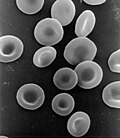 Red Blood Cells
 -
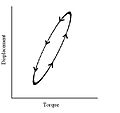 Torque Displacement


Ad. Transform your health with W8MD Weight Loss, Sleep & MedSpa

Tired of being overweight?
Get started with evidence based, physician-supervised
affordable GLP-1 weight loss injections
Now available in New York City and Philadelphia:
- Semaglutide starting from $59.99/week and up
- Tirzepatide starting from $69.99/week and up (dose dependent)
✔ Evidence-based medical weight loss ✔ Insurance-friendly visits available ✔ Same-week appointments, evenings & weekends
Learn more:
Start your transformation today with W8MD weight loss centers.
|
WikiMD Medical Encyclopedia |
Medical Disclaimer: WikiMD is for informational purposes only and is not a substitute for professional medical advice. Content may be inaccurate or outdated and should not be used for diagnosis or treatment. Always consult your healthcare provider for medical decisions. Verify information with trusted sources such as CDC.gov and NIH.gov. By using this site, you agree that WikiMD is not liable for any outcomes related to its content. See full disclaimer.
Credits:Most images are courtesy of Wikimedia commons, and templates, categories Wikipedia, licensed under CC BY SA or similar.
Translate this page: - East Asian
中文,
日本,
한국어,
South Asian
हिन्दी,
தமிழ்,
తెలుగు,
Urdu,
ಕನ್ನಡ,
Southeast Asian
Indonesian,
Vietnamese,
Thai,
မြန်မာဘာသာ,
বাংলা
European
español,
Deutsch,
français,
Greek,
português do Brasil,
polski,
română,
русский,
Nederlands,
norsk,
svenska,
suomi,
Italian
Middle Eastern & African
عربى,
Turkish,
Persian,
Hebrew,
Afrikaans,
isiZulu,
Kiswahili,
Other
Bulgarian,
Hungarian,
Czech,
Swedish,
മലയാളം,
मराठी,
ਪੰਜਾਬੀ,
ગુજરાતી,
Portuguese,
Ukrainian
