Wintergreen


Wintergreen is a group of aromatic plants. The term "wintergreen" once commonly referred to plants that remain green (continue photosynthesis) throughout the winter. The term "evergreen" is now more commonly used for this characteristic. Wintergreens are also called evergreens.
Species[edit]
Wintergreen commonly refers to the following species:
- Gaultheria procumbens - Also known as Eastern Teaberry, Checkerberry, Boxberry, or American Wintergreen. This plant is native to northeastern North America and produces red berries and white flowers.
- Pyrola - A genus of plants in the family Ericaceae, commonly known as wintergreens. These plants are found in temperate and arctic regions of the Northern Hemisphere.
- Chimaphila - Another genus in the family Ericaceae, also known as Pipsissewa or Prince's Pine. These plants are found in North America, Europe, and Asia.
Uses[edit]
Wintergreen plants have been used for various purposes:
- Essential oil - The oil extracted from wintergreen leaves, particularly from Gaultheria procumbens, contains methyl salicylate, which is used in topical pain relievers and liniments.
- Herbal medicine - Wintergreen has been used in traditional medicine for its anti-inflammatory and analgesic properties.
- Flavoring - Wintergreen oil is used as a flavoring agent in candies, chewing gum, and toothpaste.
Chemical Composition[edit]
The primary active ingredient in wintergreen oil is methyl salicylate, which is similar to aspirin and has analgesic and anti-inflammatory properties.
Cultivation[edit]
Wintergreen plants prefer acidic, well-drained soil and partial shade. They are often found in coniferous forests and thrive in cool, temperate climates.
Ecology[edit]
Wintergreen plants play a role in their ecosystems by providing food for various animals. The berries of Gaultheria procumbens, for example, are eaten by birds and small mammals.
Cultural Significance[edit]
Wintergreen has been used by various indigenous peoples for medicinal purposes. It is also a popular flavor in North American cuisine.
See Also[edit]
References[edit]
External Links[edit]

 | This medical article is a stub. You can help Wikipedia by adding missing information. |
Wintergreen[edit]
-
 Fountain Springs Wintergreen
 -
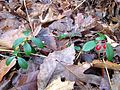 Wintergreen leaves and berries
 -
 Wintergreen Essential Oil
Ad. Transform your health with W8MD Weight Loss, Sleep & MedSpa

Tired of being overweight?
Special offer:
Budget GLP-1 weight loss medications
- Semaglutide starting from $29.99/week and up with insurance for visit of $59.99 and up per week self pay.
- Tirzepatide starting from $45.00/week and up (dose dependent) or $69.99/week and up self pay
✔ Same-week appointments, evenings & weekends
Learn more:
- GLP-1 weight loss clinic NYC
- W8MD's NYC medical weight loss
- W8MD Philadelphia GLP-1 shots
- Philadelphia GLP-1 injections
- Affordable GLP-1 shots NYC
- Budget GLP-1 shots
|
WikiMD Medical Encyclopedia |
Medical Disclaimer: WikiMD is for informational purposes only and is not a substitute for professional medical advice. Content may be inaccurate or outdated and should not be used for diagnosis or treatment. Always consult your healthcare provider for medical decisions. Verify information with trusted sources such as CDC.gov and NIH.gov. By using this site, you agree that WikiMD is not liable for any outcomes related to its content. See full disclaimer.
Credits:Most images are courtesy of Wikimedia commons, and templates, categories Wikipedia, licensed under CC BY SA or similar.
Translate this page: - East Asian
中文,
日本,
한국어,
South Asian
हिन्दी,
தமிழ்,
తెలుగు,
Urdu,
ಕನ್ನಡ,
Southeast Asian
Indonesian,
Vietnamese,
Thai,
မြန်မာဘာသာ,
বাংলা
European
español,
Deutsch,
français,
Greek,
português do Brasil,
polski,
română,
русский,
Nederlands,
norsk,
svenska,
suomi,
Italian
Middle Eastern & African
عربى,
Turkish,
Persian,
Hebrew,
Afrikaans,
isiZulu,
Kiswahili,
Other
Bulgarian,
Hungarian,
Czech,
Swedish,
മലയാളം,
मराठी,
ਪੰਜਾਬੀ,
ગુજરાતી,
Portuguese,
Ukrainian
