Althaea (plant)
Althaea (plant)[edit]
-
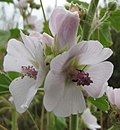 Althaea officinalis flower
 -
 Althaea officinalis habitus
 -
 Althaea (plant)


Althaea (plant)[edit]
Althaea is a genus of perennial herbs in the family Malvaceae, native to Europe and western Asia. The genus includes several species, the most well-known being Althaea officinalis, commonly known as marshmallow.
Description[edit]
Althaea plants are characterized by their tall, erect stems and soft, velvety leaves. The leaves are typically lobed and have a downy texture. The flowers are usually pink or white and have a typical mallow appearance, with five petals and numerous stamens.
Species[edit]
The genus Althaea includes several species, among which the most notable are:
- Althaea officinalis - Commonly known as marshmallow, this species is known for its medicinal properties and historical use in confectionery.
- Althaea hirsuta - Known as hairy marshmallow, this species is distinguished by its hairy stems and leaves.
- Althaea cannabina - Also known as hemp-leaved hollyhock, this species has leaves that resemble those of the Cannabis plant.
Uses[edit]
Althaea officinalis has been used for centuries in traditional medicine. The roots of the plant contain mucilage, which has soothing properties and is used to treat sore throats and other irritations. The plant was also historically used to make marshmallow confections, although modern marshmallows are typically made with gelatin.
Cultivation[edit]
Althaea plants prefer moist, well-drained soils and can be grown in full sun to partial shade. They are hardy plants that can tolerate a range of soil types, but they thrive in rich, loamy soils. They are often grown in herb gardens and cottage gardens for their attractive flowers and medicinal properties.
Related pages[edit]
Ad. Transform your life with W8MD's
GLP-1 weight loss injections special from $29.99 with insurance
|
WikiMD Medical Encyclopedia |
Medical Disclaimer: WikiMD is for informational purposes only and is not a substitute for professional medical advice. Content may be inaccurate or outdated and should not be used for diagnosis or treatment. Always consult your healthcare provider for medical decisions. Verify information with trusted sources such as CDC.gov and NIH.gov. By using this site, you agree that WikiMD is not liable for any outcomes related to its content. See full disclaimer.
Credits:Most images are courtesy of Wikimedia commons, and templates, categories Wikipedia, licensed under CC BY SA or similar.
Translate this page: - East Asian
中文,
日本,
한국어,
South Asian
हिन्दी,
தமிழ்,
తెలుగు,
Urdu,
ಕನ್ನಡ,
Southeast Asian
Indonesian,
Vietnamese,
Thai,
မြန်မာဘာသာ,
বাংলা
European
español,
Deutsch,
français,
Greek,
português do Brasil,
polski,
română,
русский,
Nederlands,
norsk,
svenska,
suomi,
Italian
Middle Eastern & African
عربى,
Turkish,
Persian,
Hebrew,
Afrikaans,
isiZulu,
Kiswahili,
Other
Bulgarian,
Hungarian,
Czech,
Swedish,
മലയാളം,
मराठी,
ਪੰਜਾਬੀ,
ગુજરાતી,
Portuguese,
Ukrainian
