Interoception
Interoception is the sense of the internal state of the body. This can be both conscious and non-conscious. It encompasses the brain's process of integrating signals relayed from the body into specific subregions—like the brainstem, thalamus, insula, somatosensory, and anterior cingulate cortex—allowing for a nuanced representation of the physiological state of the body. This is important for maintaining homeostatic conditions in the body and potentially facilitating self-awareness.
Definition and Overview[edit]
Interoception is often associated with autonomic nervous system activity related to the physiological condition of the body. It is the process by which the nervous system senses, interprets, and integrates signals originating from within the body, providing a moment-by-moment mapping of the body's internal landscape across conscious and unconscious levels.
Neuroanatomy of Interoception[edit]
The primary neuroanatomy of interoception includes the anterior cingulate cortex (ACC), insula, amygdala, and somatosensory cortex. The ACC is involved in heart rate and blood pressure modulation and is also implicated in the subjective experience of emotion. The insula also plays a role in conveying information about the body's homeostatic state to other brain regions, contributing to the subjective emotional experience.
Role in Emotion and Self-Awareness[edit]
Interoception is thought to play an important role in emotion and self-awareness. According to some theories, the brain's perception of the body's internal state forms the basis of subjective feelings and emotion. This is known as the James-Lange theory of emotion.
Clinical Significance[edit]
Impaired or atypical interoception is seen in a number of clinical conditions such as anxiety disorders, depression, eating disorders, autism, and alexithymia. Understanding the role of interoception in these conditions could lead to new treatments and interventions.
See Also[edit]
 | This medical article is a stub. You can help WikiMD by expanding the page. |
-
 Interoception and the body
 -
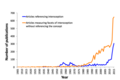
 Number of articles referencing interoception from 1905 to 2015
 -
 Facet and operational definitions
 -
 Facets of interoception
 -
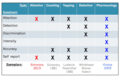 Facets of cardiac interoception
 -
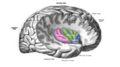 Insula structure
 -
 The insula and connecting brain regions
 -
 Insular cortex granulation
 -
 Float tank


Medical Disclaimer: WikiMD is for informational purposes only and is not a substitute for professional medical advice. Content may be inaccurate or outdated and should not be used for diagnosis or treatment. Always consult your healthcare provider for medical decisions. Verify information with trusted sources such as CDC.gov and NIH.gov. By using this site, you agree that WikiMD is not liable for any outcomes related to its content. See full disclaimer.
Credits:Most images are courtesy of Wikimedia commons, and templates, categories Wikipedia, licensed under CC BY SA or similar.
Translate this page: - East Asian
中文,
日本,
한국어,
South Asian
हिन्दी,
தமிழ்,
తెలుగు,
Urdu,
ಕನ್ನಡ,
Southeast Asian
Indonesian,
Vietnamese,
Thai,
မြန်မာဘာသာ,
বাংলা
European
español,
Deutsch,
français,
Greek,
português do Brasil,
polski,
română,
русский,
Nederlands,
norsk,
svenska,
suomi,
Italian
Middle Eastern & African
عربى,
Turkish,
Persian,
Hebrew,
Afrikaans,
isiZulu,
Kiswahili,
Other
Bulgarian,
Hungarian,
Czech,
Swedish,
മലയാളം,
मराठी,
ਪੰਜਾਬੀ,
ગુજરાતી,
Portuguese,
Ukrainian
