De materia medica
De materia medica is a seminal text in the history of medicine and botany, written by Pedanius Dioscorides in the first century AD. It is considered one of the most influential herbal texts ever compiled in the ancient world, serving as the primary reference for medicinal plants and pharmacological substances for over 1500 years. The work is a comprehensive five-volume encyclopedia detailing the use of over 600 plants, animals, and minerals, along with their medicinal properties and applications.
Origins and Historical Context
Pedanius Dioscorides, a Greek physician, pharmacologist, and botanist, served as a surgeon in the Roman army. His experiences and access to diverse plants across the Roman Empire enabled him to compile De materia medica. The text was written in Greek and later translated into Latin, Arabic, and other languages, reflecting its widespread influence across different cultures and eras.
Content and Structure
De materia medica is organized into five books:
- The first book covers aromatics and oils.
- The second book discusses animals and animal products.
- The third book is dedicated to roots, juices, and herbs.
- The fourth book focuses on herbs and roots not covered in the third book.
- The fifth book deals with wines, minerals, and other compounds.
Each entry within the books provides the name of the substance, its description, habitat, method of collection, and medicinal uses. Dioscorides emphasized the importance of the quality of each substance and the timing of its collection to maximize its therapeutic potential.
Impact and Legacy
The influence of De materia medica on both medieval and Renaissance medicine cannot be overstated. It served as the standard reference work for herbalists, physicians, and pharmacists, contributing significantly to the pharmacopeias of the Middle Ages and Renaissance. The text was a cornerstone in the development of pharmacology and botany as scientific disciplines.
In the Renaissance, the advent of printing technology facilitated the widespread distribution of De materia medica, making it accessible to a broader audience. This period also saw the text being critically examined, with scholars adding annotations and illustrations to enhance its utility and accuracy.
Modern Relevance
Today, De materia medica is of interest not only to historians of medicine and science but also to practitioners of herbal medicine, who look to ancient texts for traditional knowledge and practices. It serves as a reminder of the long history of human interaction with the natural world in the quest for healing substances.
See Also
References
<references/>

-
 De materia medica
 -
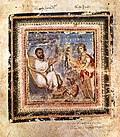 De materia medica
 -
 De materia medica
 -
 De materia medica
 -
 De materia medica
 -
 De materia medica
 -
 De materia medica
 -
 De materia medica
 -
 De materia medica
 -
 De materia medica
 -
 De materia medica
 -
 De materia medica


Ad. Transform your health with W8MD Weight Loss, Sleep & MedSpa

Tired of being overweight?
Special offer:
Budget GLP-1 weight loss medications
- Semaglutide starting from $29.99/week and up with insurance for visit of $59.99 and up per week self pay.
- Tirzepatide starting from $45.00/week and up (dose dependent) or $69.99/week and up self pay
✔ Same-week appointments, evenings & weekends
Learn more:
- GLP-1 weight loss clinic NYC
- W8MD's NYC medical weight loss
- W8MD Philadelphia GLP-1 shots
- Philadelphia GLP-1 injections
- Affordable GLP-1 shots NYC
|
WikiMD Medical Encyclopedia |
Medical Disclaimer: WikiMD is for informational purposes only and is not a substitute for professional medical advice. Content may be inaccurate or outdated and should not be used for diagnosis or treatment. Always consult your healthcare provider for medical decisions. Verify information with trusted sources such as CDC.gov and NIH.gov. By using this site, you agree that WikiMD is not liable for any outcomes related to its content. See full disclaimer.
Credits:Most images are courtesy of Wikimedia commons, and templates, categories Wikipedia, licensed under CC BY SA or similar.
Translate this page: - East Asian
中文,
日本,
한국어,
South Asian
हिन्दी,
தமிழ்,
తెలుగు,
Urdu,
ಕನ್ನಡ,
Southeast Asian
Indonesian,
Vietnamese,
Thai,
မြန်မာဘာသာ,
বাংলা
European
español,
Deutsch,
français,
Greek,
português do Brasil,
polski,
română,
русский,
Nederlands,
norsk,
svenska,
suomi,
Italian
Middle Eastern & African
عربى,
Turkish,
Persian,
Hebrew,
Afrikaans,
isiZulu,
Kiswahili,
Other
Bulgarian,
Hungarian,
Czech,
Swedish,
മലയാളം,
मराठी,
ਪੰਜਾਬੀ,
ગુજરાતી,
Portuguese,
Ukrainian
