Puto (food)
Puto (food)[edit]
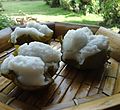
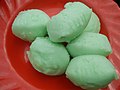
Puto is a type of steamed rice cake that is traditionally served as a delicacy in the Philippines. It is often eaten as a dessert or a snack, and is also used in various Filipino rituals and celebrations.
History[edit]
The origins of Puto can be traced back to pre-colonial times in the Philippines. It was originally made from ground rice and was steamed in banana leaves. Over time, the recipe has evolved and there are now many different variations of Puto.
Ingredients[edit]
The main ingredients in Puto are rice flour, water, and sugar. Some variations also include coconut milk, butter, cheese, and eggs. The ingredients are mixed together to form a batter, which is then steamed until it becomes a fluffy cake.
Variations[edit]
There are many different variations of Puto, each with its own unique flavor and texture. Some of the most popular variations include:
- Puto Bumbong - This is a purple-colored Puto that is made from glutinous rice and is traditionally served during the Christmas season.
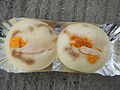
- Puto Cheese - This variation includes cheese in the batter, giving the Puto a savory flavor.
- Puto Maya - This is a type of Puto that is made from glutinous rice and is often served with ripe mangoes and hot chocolate.
Preparation[edit]
The preparation of Puto involves mixing the ingredients together to form a batter. The batter is then poured into individual molds, which are then placed in a steamer. The Puto is steamed until it becomes a fluffy cake. The cooking time can vary depending on the size of the molds and the type of Puto being made.
Serving[edit]
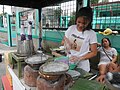
Puto is often served as a dessert or a snack. It can be eaten on its own, or it can be served with other Filipino dishes such as Dinuguan (a pork blood stew) or Pancit (noodles). Puto is also commonly served during Filipino celebrations and festivals.
Cultural Significance[edit]
Puto holds a significant place in Filipino culture. It is often used in various rituals and celebrations, such as weddings and birthdays. In some regions of the Philippines, Puto is also used as an offering to the spirits during certain religious ceremonies.
See Also[edit]
References[edit]
<references />

-
 Puto (food)
 -
 Puto (food)
 -
 Puto (food)
 -
 Puto (food)
 -
 Puto (food)
 -
 Puto (food)
 -
 Puto (food)
 -
 Puto (food)
 -
 Puto (food)
 -
 Puto (food)
 -
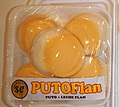 Puto (food)
 -
 Puto (food)


_with_cheese.jpg)


_with_bukayo_(sweetened_coconut)_-_Philippines.jpg)
Ad. Transform your health with W8MD Weight Loss, Sleep & MedSpa

Tired of being overweight?
Special offer:
Budget GLP-1 weight loss medications
- Semaglutide starting from $29.99/week and up with insurance for visit of $59.99 and up per week self pay.
- Tirzepatide starting from $45.00/week and up (dose dependent) or $69.99/week and up self pay
✔ Same-week appointments, evenings & weekends
Learn more:
- GLP-1 weight loss clinic NYC
- W8MD's NYC medical weight loss
- W8MD Philadelphia GLP-1 shots
- Philadelphia GLP-1 injections
- Affordable GLP-1 shots NYC
|
WikiMD Medical Encyclopedia |
Medical Disclaimer: WikiMD is for informational purposes only and is not a substitute for professional medical advice. Content may be inaccurate or outdated and should not be used for diagnosis or treatment. Always consult your healthcare provider for medical decisions. Verify information with trusted sources such as CDC.gov and NIH.gov. By using this site, you agree that WikiMD is not liable for any outcomes related to its content. See full disclaimer.
Credits:Most images are courtesy of Wikimedia commons, and templates, categories Wikipedia, licensed under CC BY SA or similar.
Translate this page: - East Asian
中文,
日本,
한국어,
South Asian
हिन्दी,
தமிழ்,
తెలుగు,
Urdu,
ಕನ್ನಡ,
Southeast Asian
Indonesian,
Vietnamese,
Thai,
မြန်မာဘာသာ,
বাংলা
European
español,
Deutsch,
français,
Greek,
português do Brasil,
polski,
română,
русский,
Nederlands,
norsk,
svenska,
suomi,
Italian
Middle Eastern & African
عربى,
Turkish,
Persian,
Hebrew,
Afrikaans,
isiZulu,
Kiswahili,
Other
Bulgarian,
Hungarian,
Czech,
Swedish,
മലയാളം,
मराठी,
ਪੰਜਾਬੀ,
ગુજરાતી,
Portuguese,
Ukrainian
