Citrus × sinensis
Citrus × sinensis, commonly known as the sweet orange, is a hybrid of Citrus maxima (pomelo) and Citrus reticulata (mandarin). It is the most commonly grown tree fruit in the world.
Taxonomy[edit]
The binomial name Citrus × sinensis denotes its hybrid status – the '×' symbol indicates a hybrid. The sweet orange is a member of the Rutaceae family, which also includes other citrus fruits like lemons, limes, and grapefruits.
Description[edit]
The sweet orange tree is an evergreen, flowering tree, with an average height of 9 to 10 m (30 to 33 ft), although some very old specimens can reach 15 m (49 ft). Its oval leaves, alternately arranged, are 4 to 10 cm (1.6 to 3.9 in) long and have crenulate margins. The sweet orange has a compact and round crown.
Cultivation[edit]
Sweet orange trees thrive in a wide range of soil conditions, but prefer well-drained, sandy loam soils. They are propagated by grafting onto rootstocks. The trees are usually grown in orchards and are harvested in the winter months.
Uses[edit]
Sweet oranges are primarily grown for their fruit, which is eaten fresh or processed to extract orange juice. The peel is also used in certain recipes as a flavoring or garnish, and the volatile oil it contains is used in perfumery and as a flavoring.
Health benefits[edit]
Sweet oranges are a good source of vitamin C and other nutrients. They also contain dietary fiber and are low in calories, making them a healthy choice for a snack.
See also[edit]

-
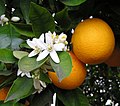 Orange blossoms
 -
 Orangerie at the Château de Versailles
 -
 Orange flowers
 -
 Unripened orange
 -
 Oranges and blood oranges
 -
 Arancia di Ribera
 -
 Orange tree
 -
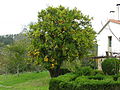 Laranxeira Naranjo


.jpg)


Ad. Transform your life with W8MD's
GLP-1 weight loss injections special from $29.99 with insurance
|
WikiMD Medical Encyclopedia |
Medical Disclaimer: WikiMD is for informational purposes only and is not a substitute for professional medical advice. Content may be inaccurate or outdated and should not be used for diagnosis or treatment. Always consult your healthcare provider for medical decisions. Verify information with trusted sources such as CDC.gov and NIH.gov. By using this site, you agree that WikiMD is not liable for any outcomes related to its content. See full disclaimer.
Credits:Most images are courtesy of Wikimedia commons, and templates, categories Wikipedia, licensed under CC BY SA or similar.
Translate this page: - East Asian
中文,
日本,
한국어,
South Asian
हिन्दी,
தமிழ்,
తెలుగు,
Urdu,
ಕನ್ನಡ,
Southeast Asian
Indonesian,
Vietnamese,
Thai,
မြန်မာဘာသာ,
বাংলা
European
español,
Deutsch,
français,
Greek,
português do Brasil,
polski,
română,
русский,
Nederlands,
norsk,
svenska,
suomi,
Italian
Middle Eastern & African
عربى,
Turkish,
Persian,
Hebrew,
Afrikaans,
isiZulu,
Kiswahili,
Other
Bulgarian,
Hungarian,
Czech,
Swedish,
മലയാളം,
मराठी,
ਪੰਜਾਬੀ,
ગુજરાતી,
Portuguese,
Ukrainian
