Feminizing hormone therapy
Feminizing hormone therapy, also known as gender-affirming hormone therapy, is a form of hormone therapy and gender transition for transgender women and non-binary individuals who are assigned male at birth but identify as female or feminine. This medical process involves the administration of estrogens and antiandrogens to induce physical changes in the body aligned with one's gender identity. The goal of feminizing hormone therapy is to reduce masculine characteristics and promote the development of feminine physical traits.
Indications[edit]
Feminizing hormone therapy is indicated for individuals diagnosed with gender dysphoria, a condition where there is a significant discrepancy between their assigned sex at birth and their experienced or expressed gender. This therapy is part of the transition process for those seeking to align their physical appearance with their gender identity.
Hormonal Medications[edit]
The primary medications used in feminizing hormone therapy include:
- Estrogens: These are the main hormones responsible for promoting female secondary sexual characteristics such as breast development, redistribution of body fat, and skin softening. Common forms include estradiol pills, patches, and injections.
- Antiandrogens: These medications reduce the effects of testosterone in the body, decreasing masculine features such as facial hair and deepening of the voice. Examples include spironolactone, finasteride, and cyproterone acetate.
- Progesterone: Some practitioners may add progesterone to support breast development and mood, although its use remains controversial and not universally endorsed.
Effects and Changes[edit]
Feminizing hormone therapy leads to various physical and emotional changes, which may include:
- Development of breast tissue
- Redistribution of body fat to hips and thighs
- Softening of skin
- Decrease in muscle mass
- Thinning and slowed growth of body and facial hair
- Reduced erections and changes in libido
- Possible fertility reduction
It is important to note that the extent and rate of changes vary among individuals and some effects may be irreversible.
Risks and Monitoring[edit]
While feminizing hormone therapy can significantly improve quality of life and psychological well-being, it also carries potential risks and side effects. These may include:
- Venous thromboembolism
- Cardiovascular disease
- Liver dysfunction
- Weight gain
- Infertility
Regular monitoring by healthcare providers is essential to manage these risks. Blood tests are typically performed to monitor hormone levels, liver function, and lipid profiles.
Access and Administration[edit]
Access to feminizing hormone therapy may vary depending on local laws and healthcare systems. In many cases, individuals are required to undergo a psychological assessment before starting therapy. Hormones should only be taken under the supervision of a qualified healthcare provider to ensure safety and effectiveness.
Conclusion[edit]
Feminizing hormone therapy is a critical component of the transition process for many transgender women and non-binary individuals, offering significant benefits in aligning one's physical appearance with their gender identity. However, it is essential to approach this therapy with a comprehensive understanding of the potential risks and to engage in ongoing medical supervision.
 | This medical article is a stub. You can help WikiMD by expanding the page. |
-
 Estradiol levels with rectal administration of estradiol in women
 -
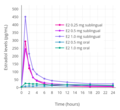 Estradiol levels with oral versus sublingual estradiol in postmenopausal women
 -
 Testosterone levels as a function of estradiol levels during oral estradiol therapy in transgender women
 -
 Estradiol and testosterone levels with a single intramuscular injection of 320 mg polyestradiol phosphate in men
 -
 Testosterone levels with estradiol alone, estradiol plus spironolactone, and estradiol plus cyproterone acetate in transfeminine people
 -
 Feminizing hormone therapy


Medical Disclaimer: WikiMD is for informational purposes only and is not a substitute for professional medical advice. Content may be inaccurate or outdated and should not be used for diagnosis or treatment. Always consult your healthcare provider for medical decisions. Verify information with trusted sources such as CDC.gov and NIH.gov. By using this site, you agree that WikiMD is not liable for any outcomes related to its content. See full disclaimer.
Credits:Most images are courtesy of Wikimedia commons, and templates, categories Wikipedia, licensed under CC BY SA or similar.
Translate this page: - East Asian
中文,
日本,
한국어,
South Asian
हिन्दी,
தமிழ்,
తెలుగు,
Urdu,
ಕನ್ನಡ,
Southeast Asian
Indonesian,
Vietnamese,
Thai,
မြန်မာဘာသာ,
বাংলা
European
español,
Deutsch,
français,
Greek,
português do Brasil,
polski,
română,
русский,
Nederlands,
norsk,
svenska,
suomi,
Italian
Middle Eastern & African
عربى,
Turkish,
Persian,
Hebrew,
Afrikaans,
isiZulu,
Kiswahili,
Other
Bulgarian,
Hungarian,
Czech,
Swedish,
മലയാളം,
मराठी,
ਪੰਜਾਬੀ,
ગુજરાતી,
Portuguese,
Ukrainian
