Vegan nutrition
Nutritional aspects of a vegan diet


Vegan nutrition refers to the dietary intake and nutritional considerations of individuals who follow a vegan diet, which excludes all animal products. This includes meat, dairy, eggs, and other animal-derived substances. A well-planned vegan diet can provide all the necessary nutrients for a healthy lifestyle, but it requires careful attention to certain nutrients that are typically found in animal products.
Key Nutrients[edit]
Protein[edit]
Protein is essential for the growth and repair of tissues. Vegans can obtain protein from a variety of plant-based sources such as legumes, nuts, seeds, and soy products like tofu and tempeh.
Vitamin B12[edit]
Vitamin B12 is crucial for nerve function and the production of DNA and red blood cells. It is not naturally found in plant foods, so vegans need to consume fortified foods or take supplements to meet their B12 needs.
Iron[edit]
Iron is important for the formation of hemoglobin in blood. Plant-based sources of iron include lentils, chickpeas, beans, and spinach. Consuming vitamin C-rich foods alongside iron-rich foods can enhance iron absorption.
Calcium[edit]
Calcium is necessary for bone health. Vegans can obtain calcium from fortified plant milks, tofu, almonds, and leafy green vegetables like kale and bok choy.
Omega-3 Fatty Acids[edit]
Omega-3 fatty acids are important for heart and brain health. Sources for vegans include flax seeds, chia seeds, hemp seeds, and walnuts.


Vitamin D[edit]
Vitamin D is important for bone health and immune function. Vegans can obtain vitamin D from fortified foods, supplements, and exposure to sunlight.
Zinc[edit]
Zinc is important for immune function and cell division. Plant sources include beans, lentils, nuts, seeds, and whole grains.
Health Benefits[edit]
A vegan diet has been associated with various health benefits, including a lower risk of heart disease, high blood pressure, type 2 diabetes, and certain types of cancer. It is also linked to lower body mass index (BMI) and improved cholesterol levels.
Potential Challenges[edit]
While a vegan diet can be healthful, it requires careful planning to avoid nutritional deficiencies. Vegans need to be mindful of their intake of vitamin B12, iron, calcium, omega-3 fatty acids, and vitamin D.
Related Pages[edit]
References[edit]
-
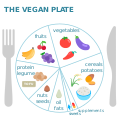 Vegan Plate
 -
 Vegan Food Pyramid
 -
 Flax Seeds
 -
 English Walnuts
Ad. Transform your health with W8MD Weight Loss, Sleep & MedSpa

Tired of being overweight?
Get started with evidence based, physician-supervised
affordable GLP-1 weight loss injections
Now available in New York City and Philadelphia:
- Semaglutide starting from $59.99/week and up
- Tirzepatide starting from $69.99/week and up (dose dependent)
✔ Evidence-based medical weight loss ✔ Insurance-friendly visits available ✔ Same-week appointments, evenings & weekends
Learn more:
Start your transformation today with W8MD weight loss centers.
|
WikiMD Medical Encyclopedia |
Medical Disclaimer: WikiMD is for informational purposes only and is not a substitute for professional medical advice. Content may be inaccurate or outdated and should not be used for diagnosis or treatment. Always consult your healthcare provider for medical decisions. Verify information with trusted sources such as CDC.gov and NIH.gov. By using this site, you agree that WikiMD is not liable for any outcomes related to its content. See full disclaimer.
Credits:Most images are courtesy of Wikimedia commons, and templates, categories Wikipedia, licensed under CC BY SA or similar.
Translate this page: - East Asian
中文,
日本,
한국어,
South Asian
हिन्दी,
தமிழ்,
తెలుగు,
Urdu,
ಕನ್ನಡ,
Southeast Asian
Indonesian,
Vietnamese,
Thai,
မြန်မာဘာသာ,
বাংলা
European
español,
Deutsch,
français,
Greek,
português do Brasil,
polski,
română,
русский,
Nederlands,
norsk,
svenska,
suomi,
Italian
Middle Eastern & African
عربى,
Turkish,
Persian,
Hebrew,
Afrikaans,
isiZulu,
Kiswahili,
Other
Bulgarian,
Hungarian,
Czech,
Swedish,
മലയാളം,
मराठी,
ਪੰਜਾਬੀ,
ગુજરાતી,
Portuguese,
Ukrainian
