Hyderabadi haleem
Hyderabadi Haleem is a type of Haleem that originated in the city of Hyderabad, India. It is a stew composed of meat, lentils and pounded wheat made into a thick paste. It is originally an Arabic dish and was introduced to the Hyderabad State by the Chaush people during the rule of the Nizams (the former monarchs of Hyderabad State).
History[edit]
Hyderabadi Haleem was introduced to the Indian city of Hyderabad during the Mughal Empire. It was popularized by the Hyderabadi Muslims and has become an integral part of Hyderabadi cuisine. The dish is associated with the Muslim month of Ramadan and is consumed before dawn (suhoor) or after sunset (iftar).
Preparation[edit]
The preparation of Hyderabadi Haleem involves cooking the ingredients on a low flame for up to twelve hours, which results in a paste-like consistency. The dish is garnished with lemon juice, coriander and fried onions. It is served with naan or rice.
Cultural Significance[edit]
Hyderabadi Haleem has gained popularity not only in Hyderabad but also in other parts of India and abroad. It has become a traditional dish during the Muslim holy month of Ramadan. In 2010, Hyderabadi Haleem was granted Geographical Indication status by the Indian government, making it the first non-vegetarian dish in India to receive this status.
See Also[edit]


Hyderabadi_haleem[edit]
-
 Dalls and grains used in Hyderabadi haleem
 -
 Garam masala used for making Hyderabadi haleem
 -
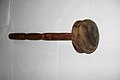 Gotni used in the preparation of Hyderabadi haleem


Ad. Transform your life with W8MD's
GLP-1 weight loss injections special from $29.99 with insurance
|
WikiMD Medical Encyclopedia |
Medical Disclaimer: WikiMD is for informational purposes only and is not a substitute for professional medical advice. Content may be inaccurate or outdated and should not be used for diagnosis or treatment. Always consult your healthcare provider for medical decisions. Verify information with trusted sources such as CDC.gov and NIH.gov. By using this site, you agree that WikiMD is not liable for any outcomes related to its content. See full disclaimer.
Credits:Most images are courtesy of Wikimedia commons, and templates, categories Wikipedia, licensed under CC BY SA or similar.
Translate this page: - East Asian
中文,
日本,
한국어,
South Asian
हिन्दी,
தமிழ்,
తెలుగు,
Urdu,
ಕನ್ನಡ,
Southeast Asian
Indonesian,
Vietnamese,
Thai,
မြန်မာဘာသာ,
বাংলা
European
español,
Deutsch,
français,
Greek,
português do Brasil,
polski,
română,
русский,
Nederlands,
norsk,
svenska,
suomi,
Italian
Middle Eastern & African
عربى,
Turkish,
Persian,
Hebrew,
Afrikaans,
isiZulu,
Kiswahili,
Other
Bulgarian,
Hungarian,
Czech,
Swedish,
മലയാളം,
मराठी,
ਪੰਜਾਬੀ,
ગુજરાતી,
Portuguese,
Ukrainian
