Fagopyrum tataricum
Fagopyrum tataricum, also known as Tartary buckwheat or bitter buckwheat, is a plant species within the genus Fagopyrum in the family Polygonaceae. It is native to the mountainous regions of the Himalayas, and is cultivated in many parts of the world for its grain-like seeds.
Description[edit]
Fagopyrum tataricum is an annual plant that grows to a height of 60–100 cm. The plant has heart-shaped leaves and small pink or white flowers. The seeds, which are triangular in shape, are used as a food source in a similar way to cereal grains.
Cultivation and uses[edit]
Tartary buckwheat is grown in a variety of climates, from the cool, high-altitude regions of the Himalayas to the warmer climates of Southeast Asia. The plant is highly adaptable and can grow in poor, acidic soils where other crops cannot survive. The seeds of Fagopyrum tataricum are used to make a variety of food products, including flour, noodles, and tea. The seeds are also used in traditional medicine in some cultures.
Nutritional value[edit]
Tartary buckwheat seeds are rich in protein, fiber, and minerals. They are also a good source of rutin, a bioflavonoid that has been shown to have antioxidant properties. In addition, the seeds contain quercetin, a flavonoid that has been linked to a variety of health benefits.
Research[edit]
Research into the potential health benefits of Tartary buckwheat is ongoing. Studies have suggested that the seeds may have anti-inflammatory, anti-cancer, and anti-diabetic properties. However, more research is needed to confirm these findings.
See also[edit]

-
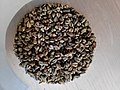 Fagopyrum tataricum plant
 -
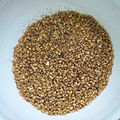 Grains of Fagopyrum tataricum


Ad. Transform your life with W8MD's
GLP-1 weight loss injections special from $29.99 with insurance
|
WikiMD Medical Encyclopedia |
Medical Disclaimer: WikiMD is for informational purposes only and is not a substitute for professional medical advice. Content may be inaccurate or outdated and should not be used for diagnosis or treatment. Always consult your healthcare provider for medical decisions. Verify information with trusted sources such as CDC.gov and NIH.gov. By using this site, you agree that WikiMD is not liable for any outcomes related to its content. See full disclaimer.
Credits:Most images are courtesy of Wikimedia commons, and templates, categories Wikipedia, licensed under CC BY SA or similar.
Translate this page: - East Asian
中文,
日本,
한국어,
South Asian
हिन्दी,
தமிழ்,
తెలుగు,
Urdu,
ಕನ್ನಡ,
Southeast Asian
Indonesian,
Vietnamese,
Thai,
မြန်မာဘာသာ,
বাংলা
European
español,
Deutsch,
français,
Greek,
português do Brasil,
polski,
română,
русский,
Nederlands,
norsk,
svenska,
suomi,
Italian
Middle Eastern & African
عربى,
Turkish,
Persian,
Hebrew,
Afrikaans,
isiZulu,
Kiswahili,
Other
Bulgarian,
Hungarian,
Czech,
Swedish,
മലയാളം,
मराठी,
ਪੰਜਾਬੀ,
ગુજરાતી,
Portuguese,
Ukrainian
