Wat (food)
Wat (food)[edit]
Wat, also known as Wot or W'et, is a traditional Ethiopian and Eritrean stew that is prepared with meat, vegetables, and a variety of spices. It is a staple dish in the cuisines of these countries and is often served with Injera, a sourdough flatbread.
Ingredients[edit]
The main ingredients in Wat include meat (usually beef, lamb, or chicken), vegetables such as onions and garlic, and a variety of spices. The most common spices used are Berbere, a spice mixture that includes chili peppers, garlic, ginger, basil, korarima, rue, ajwain or radhuni, nigella, and fenugreek, and Niter Kibbeh, a seasoned clarified butter.
Preparation[edit]
Wat is prepared by first sautéing onions in Niter Kibbeh. Once the onions are caramelized, Berbere is added, followed by the meat. The mixture is then simmered until the meat is tender. Some versions of Wat also include vegetables such as carrots, potatoes, and bell peppers.
Variations[edit]
There are several variations of Wat, including Doro Wat, which is made with chicken and hard-boiled eggs, and Key Wat, which is a spicy beef stew. There is also a vegetarian version of Wat known as Atkilt Wat, which is made with cabbage, carrots, and potatoes.
Serving[edit]
Wat is traditionally served with Injera, which is used to scoop up the stew. It is also often accompanied by Ayib, a homemade cottage cheese, and Teff, a grain that is native to Ethiopia and Eritrea.
Cultural Significance[edit]
Wat holds a significant place in the culinary traditions of Ethiopia and Eritrea. It is often served during special occasions and religious holidays. In particular, Doro Wat is a traditional dish served during Ethiopian Christmas and Easter.
See Also[edit]
References[edit]
External Links[edit]

- Wat (food)
-
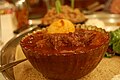 Ethiopian wat
 -
 A formal serving of wat atop injera in Brussels, Belgium


Ad. Transform your life with W8MD's
GLP-1 weight loss injections special from $29.99 with insurance
|
WikiMD Medical Encyclopedia |
Medical Disclaimer: WikiMD is for informational purposes only and is not a substitute for professional medical advice. Content may be inaccurate or outdated and should not be used for diagnosis or treatment. Always consult your healthcare provider for medical decisions. Verify information with trusted sources such as CDC.gov and NIH.gov. By using this site, you agree that WikiMD is not liable for any outcomes related to its content. See full disclaimer.
Credits:Most images are courtesy of Wikimedia commons, and templates, categories Wikipedia, licensed under CC BY SA or similar.
Translate this page: - East Asian
中文,
日本,
한국어,
South Asian
हिन्दी,
தமிழ்,
తెలుగు,
Urdu,
ಕನ್ನಡ,
Southeast Asian
Indonesian,
Vietnamese,
Thai,
မြန်မာဘာသာ,
বাংলা
European
español,
Deutsch,
français,
Greek,
português do Brasil,
polski,
română,
русский,
Nederlands,
norsk,
svenska,
suomi,
Italian
Middle Eastern & African
عربى,
Turkish,
Persian,
Hebrew,
Afrikaans,
isiZulu,
Kiswahili,
Other
Bulgarian,
Hungarian,
Czech,
Swedish,
മലയാളം,
मराठी,
ਪੰਜਾਬੀ,
ગુજરાતી,
Portuguese,
Ukrainian
