WHO classification of tumours of the central nervous system
WHO Classification of Tumours of the Central Nervous System is a systematic framework used by pathologists and healthcare professionals worldwide to diagnose and classify tumours of the central nervous system (CNS). This classification is periodically updated by the World Health Organization (WHO) to incorporate new scientific and clinical information, making it a critical tool for research, diagnosis, and treatment planning in neuro-oncology.
Overview[edit]
The WHO classification system categorizes CNS tumours based on their histological features, genetic abnormalities, and, in some cases, their clinical behavior. This multidisciplinary approach helps in understanding the prognosis and potential treatment strategies for various CNS tumours. The classification is revised through the consensus of international experts in the field and is published in the WHO Classification of Tumours series.
Historical Background[edit]
The WHO classification of CNS tumours has evolved significantly since its first edition. Initial classifications were primarily based on microscopic histological characteristics. Over the years, with advancements in genetics and molecular biology, the classification has incorporated molecular parameters that provide a more accurate diagnosis and better predict clinical outcomes.
Current Edition[edit]
The most recent edition of the WHO Classification of Tumours of the CNS was published in 2016, with an update in 2021. This edition introduces a more integrated approach that combines histological and molecular features to define many tumour entities, reflecting the progress in understanding the biology of CNS tumours.
Key Features[edit]
The classification includes several key features:
- Integration of histological and molecular characteristics
- Introduction of new tumour entities and variants
- Revisions of diagnostic criteria for established entities
- Implementation of a more precise grading system
Tumour Categories[edit]
CNS tumours are categorized into several major groups according to their presumed cell of origin. These include:
- Gliomas
- Meningiomas
- Neuronal and mixed neuronal-glial tumours
- Embryonal tumours
- Tumours of the cranial and paraspinal nerves
- Tumours of the pituitary gland
- Lymphomas and haematopoietic neoplasms of the CNS
- Germ cell tumours
- Tumours of the sellar region
Impact[edit]
The WHO classification has a profound impact on the management of CNS tumours. It guides biopsy and surgical resection strategies, informs prognosis, and influences the choice of chemotherapy, radiation therapy, and other targeted therapies. Moreover, it facilitates research and clinical trials by providing a standardized language for the description and reporting of CNS tumour cases.
Challenges and Future Directions[edit]
Despite its widespread adoption, the WHO classification faces challenges, including the need for continuous updates to incorporate new research findings and the availability of molecular testing in different parts of the world. Future revisions will likely see further integration of molecular diagnostics, refinement of tumour categories, and possibly the introduction of new therapeutic targets.

WHO classification of tumours of the central nervous system[edit]
-
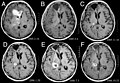 Anaplastic astrocytoma

Ad. Transform your life with W8MD's
GLP-1 weight loss injections special from $29.99 with insurance
|
WikiMD Medical Encyclopedia |
Medical Disclaimer: WikiMD is for informational purposes only and is not a substitute for professional medical advice. Content may be inaccurate or outdated and should not be used for diagnosis or treatment. Always consult your healthcare provider for medical decisions. Verify information with trusted sources such as CDC.gov and NIH.gov. By using this site, you agree that WikiMD is not liable for any outcomes related to its content. See full disclaimer.
Credits:Most images are courtesy of Wikimedia commons, and templates, categories Wikipedia, licensed under CC BY SA or similar.
Translate this page: - East Asian
中文,
日本,
한국어,
South Asian
हिन्दी,
தமிழ்,
తెలుగు,
Urdu,
ಕನ್ನಡ,
Southeast Asian
Indonesian,
Vietnamese,
Thai,
မြန်မာဘာသာ,
বাংলা
European
español,
Deutsch,
français,
Greek,
português do Brasil,
polski,
română,
русский,
Nederlands,
norsk,
svenska,
suomi,
Italian
Middle Eastern & African
عربى,
Turkish,
Persian,
Hebrew,
Afrikaans,
isiZulu,
Kiswahili,
Other
Bulgarian,
Hungarian,
Czech,
Swedish,
മലയാളം,
मराठी,
ਪੰਜਾਬੀ,
ગુજરાતી,
Portuguese,
Ukrainian
