Acetyl-CoA carboxylase
Acetyl-CoA carboxylase


Acetyl-CoA carboxylase (ACC) is a biotin-dependent enzyme that catalyzes the carboxylation of acetyl-CoA to form malonyl-CoA. This reaction is the first committed step in fatty acid synthesis and is a key regulatory point in the metabolic pathway.
Structure
Acetyl-CoA carboxylase is a multi-domain enzyme that consists of three main functional components: the biotin carboxylase (BC) domain, the biotin carboxyl carrier protein (BCCP) domain, and the carboxytransferase (CT) domain. The BC domain catalyzes the ATP-dependent carboxylation of biotin, which is then transferred to the BCCP domain. The CT domain catalyzes the transfer of the carboxyl group from biotin to acetyl-CoA, forming malonyl-CoA.
Function
The primary function of acetyl-CoA carboxylase is to provide malonyl-CoA for the synthesis of long-chain fatty acids. Malonyl-CoA is also an important regulator of fatty acid oxidation, as it inhibits carnitine palmitoyltransferase I (CPT1), the enzyme responsible for transporting fatty acids into the mitochondria for oxidation.
Regulation
Acetyl-CoA carboxylase is regulated by multiple mechanisms, including allosteric regulation, covalent modification, and changes in gene expression. The enzyme is activated by citrate, which promotes polymerization of the enzyme into its active form, and inhibited by palmitoyl-CoA, which promotes depolymerization. Phosphorylation by AMP-activated protein kinase (AMPK) and other kinases inactivates ACC, while dephosphorylation by protein phosphatases activates it.
Clinical significance
Dysregulation of acetyl-CoA carboxylase activity is associated with metabolic disorders such as obesity, type 2 diabetes, and non-alcoholic fatty liver disease. Inhibitors of ACC are being investigated as potential therapeutic agents for these conditions.
Related pages
Gallery
-
 Biotin carboxylase structure
 -
 Biotin carboxyl carrier protein
 -
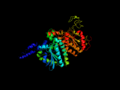 Carboxytransferase structure
 -
 Mechanism of acetyl-CoA carboxylase
 -
 Regulation of acetyl-CoA carboxylase
Ad. Transform your life with W8MD's
GLP-1 weight loss injections special from $29.99 with insurance
|
WikiMD Medical Encyclopedia |
Medical Disclaimer: WikiMD is for informational purposes only and is not a substitute for professional medical advice. Content may be inaccurate or outdated and should not be used for diagnosis or treatment. Always consult your healthcare provider for medical decisions. Verify information with trusted sources such as CDC.gov and NIH.gov. By using this site, you agree that WikiMD is not liable for any outcomes related to its content. See full disclaimer.
Credits:Most images are courtesy of Wikimedia commons, and templates, categories Wikipedia, licensed under CC BY SA or similar.
Translate this page: - East Asian
中文,
日本,
한국어,
South Asian
हिन्दी,
தமிழ்,
తెలుగు,
Urdu,
ಕನ್ನಡ,
Southeast Asian
Indonesian,
Vietnamese,
Thai,
မြန်မာဘာသာ,
বাংলা
European
español,
Deutsch,
français,
Greek,
português do Brasil,
polski,
română,
русский,
Nederlands,
norsk,
svenska,
suomi,
Italian
Middle Eastern & African
عربى,
Turkish,
Persian,
Hebrew,
Afrikaans,
isiZulu,
Kiswahili,
Other
Bulgarian,
Hungarian,
Czech,
Swedish,
മലയാളം,
मराठी,
ਪੰਜਾਬੀ,
ગુજરાતી,
Portuguese,
Ukrainian
