ACDC (medicine)
A medical procedure for knee joint assessment
ACDC (medicine) refers to a specific medical procedure used in the assessment and diagnosis of knee joint conditions. This procedure is particularly useful in evaluating the anterior cruciate ligament (ACL) and other structures within the knee joint.
Overview
The ACDC procedure is a diagnostic technique that involves the use of advanced imaging and clinical assessment to evaluate the integrity of the knee joint. It is commonly employed in cases where patients present with knee pain, instability, or suspected ligamentous injuries.
Procedure
The ACDC procedure typically involves the following steps:
- Patient Preparation: The patient is positioned appropriately to allow for optimal access to the knee joint. This may involve the use of a specialized table or support to stabilize the limb.
- Imaging Techniques: Advanced imaging modalities such as magnetic resonance imaging (MRI) or ultrasound may be used to visualize the internal structures of the knee.
- Clinical Assessment: A thorough clinical examination is conducted to assess the range of motion, stability, and any signs of swelling or tenderness.
- Diagnostic Maneuvers: Specific maneuvers may be performed to test the integrity of the ACL and other ligaments. These may include the Lachman test, pivot shift test, and others.
Applications
The ACDC procedure is primarily used in the following scenarios:
- ACL Injuries: To confirm or rule out tears or ruptures of the anterior cruciate ligament.
- Meniscal Tears: To assess the condition of the meniscus and identify any tears or degenerative changes.
- Cartilage Damage: To evaluate the articular cartilage for signs of wear or injury.
- Knee Instability: To determine the cause of instability and guide treatment planning.
Advantages
The ACDC procedure offers several advantages in the assessment of knee joint conditions:
- Non-invasive: It is a non-invasive procedure that reduces the need for surgical exploration.
- Accurate Diagnosis: Provides detailed information about the condition of the knee joint, aiding in accurate diagnosis.
- Guides Treatment: Helps in planning appropriate treatment strategies, whether surgical or conservative.
Limitations
Despite its advantages, the ACDC procedure has certain limitations:
- Cost: Advanced imaging techniques can be expensive and may not be accessible to all patients.
- Availability: Requires specialized equipment and trained personnel, which may not be available in all healthcare settings.
Related pages
Gallery
-
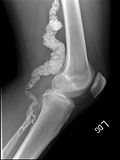 An image depicting the ACDC procedure on a knee joint.

Ad. Transform your health with W8MD Weight Loss, Sleep & MedSpa

Tired of being overweight?
Special offer:
Budget GLP-1 weight loss medications
- Semaglutide starting from $29.99/week and up with insurance for visit of $59.99 and up per week self pay.
- Tirzepatide starting from $45.00/week and up (dose dependent) or $69.99/week and up self pay
✔ Same-week appointments, evenings & weekends
Learn more:
- GLP-1 weight loss clinic NYC
- W8MD's NYC medical weight loss
- W8MD Philadelphia GLP-1 shots
- Philadelphia GLP-1 injections
- Affordable GLP-1 shots NYC
|
WikiMD Medical Encyclopedia |
Medical Disclaimer: WikiMD is for informational purposes only and is not a substitute for professional medical advice. Content may be inaccurate or outdated and should not be used for diagnosis or treatment. Always consult your healthcare provider for medical decisions. Verify information with trusted sources such as CDC.gov and NIH.gov. By using this site, you agree that WikiMD is not liable for any outcomes related to its content. See full disclaimer.
Credits:Most images are courtesy of Wikimedia commons, and templates, categories Wikipedia, licensed under CC BY SA or similar.
Translate this page: - East Asian
中文,
日本,
한국어,
South Asian
हिन्दी,
தமிழ்,
తెలుగు,
Urdu,
ಕನ್ನಡ,
Southeast Asian
Indonesian,
Vietnamese,
Thai,
မြန်မာဘာသာ,
বাংলা
European
español,
Deutsch,
français,
Greek,
português do Brasil,
polski,
română,
русский,
Nederlands,
norsk,
svenska,
suomi,
Italian
Middle Eastern & African
عربى,
Turkish,
Persian,
Hebrew,
Afrikaans,
isiZulu,
Kiswahili,
Other
Bulgarian,
Hungarian,
Czech,
Swedish,
മലയാളം,
मराठी,
ਪੰਜਾਬੀ,
ગુજરાતી,
Portuguese,
Ukrainian
