Armillifer armillatus
Apostasy
Apostasy is the formal disaffiliation from, abandonment of, or renunciation of a religion by a person. It can also be defined within the broader context of embracing an opinion contrary to one's previous religious beliefs. Apostasy is considered a serious offense in many religions, often resulting in social ostracism, excommunication, or even legal penalties in some jurisdictions.
Etymology
The term "apostasy" is derived from the Greek word "apostasia," which means "a defection or revolt." In religious contexts, it refers to the act of leaving one's faith or religious community.
Historical Context
Throughout history, apostasy has been viewed differently across various cultures and religions. In ancient times, apostasy was often equated with treason, as religion and state were closely intertwined. For example, in ancient Rome, Christians were persecuted for refusing to worship the Roman gods, which was seen as an act of apostasy against the state religion.
Apostasy in Major Religions
Christianity
In Christianity, apostasy is often associated with the rejection of the faith after having once accepted it. The New Testament contains several warnings against apostasy, and it is considered a grave sin. Different denominations have varying views on apostasy, with some seeing it as a sign of never having been truly saved.
Islam
In Islam, apostasy is known as "irtidad" or "ridda." It is considered a serious offense, and traditional Islamic law prescribes severe penalties for apostates, including the death penalty. However, interpretations and applications of these laws vary widely among Muslim-majority countries and communities.
Judaism
Judaism does not have a formal concept of apostasy, but leaving the Jewish faith is often seen as a serious breach of community and family ties. Historically, Jewish apostates were often shunned or excommunicated.
Hinduism
Hinduism generally does not have a concept of apostasy, as it is a diverse and pluralistic religion. However, leaving one's caste or community can have social repercussions.
Legal Aspects
Apostasy Laws
Apostasy laws vary significantly around the world. In some countries, apostasy is a criminal offense punishable by death or imprisonment. In others, it is not legally recognized, and individuals are free to change their religious beliefs without legal consequences.
International Human Rights
The right to freedom of thought, conscience, and religion is protected under international human rights law, including the Universal Declaration of Human Rights. This includes the right to change one's religion or belief.
Social and Cultural Implications
Apostasy can lead to significant social and cultural consequences, including ostracism from one's community, loss of family ties, and discrimination. In some societies, apostates may face threats to their safety and well-being.
Related Pages
Gallery
-
 Map of apostasy laws around the world.
 -
 The Kiss of Judas, a symbol of betrayal and apostasy.
 -
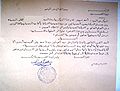 Legal opinion on apostasy in Islam.
 -
 Mattathias confronting an apostate.
 -
 Apostasy logo.


Ad. Transform your life with W8MD's Budget GLP-1 injections from $75


W8MD offers a medical weight loss program to lose weight in Philadelphia. Our physician-supervised medical weight loss provides:
- Weight loss injections in NYC (generic and brand names):
- Zepbound / Mounjaro, Wegovy / Ozempic, Saxenda
- Most insurances accepted or discounted self-pay rates. We will obtain insurance prior authorizations if needed.
- Generic GLP1 weight loss injections from $75 for the starting dose.
- Also offer prescription weight loss medications including Phentermine, Qsymia, Diethylpropion, Contrave etc.
NYC weight loss doctor appointmentsNYC weight loss doctor appointments
Start your NYC weight loss journey today at our NYC medical weight loss and Philadelphia medical weight loss clinics.
- Call 718-946-5500 to lose weight in NYC or for medical weight loss in Philadelphia 215-676-2334.
- Tags:NYC medical weight loss, Philadelphia lose weight Zepbound NYC, Budget GLP1 weight loss injections, Wegovy Philadelphia, Wegovy NYC, Philadelphia medical weight loss, Brookly weight loss and Wegovy NYC


|
WikiMD's Wellness Encyclopedia |
| Let Food Be Thy Medicine Medicine Thy Food - Hippocrates |
Medical Disclaimer: WikiMD is not a substitute for professional medical advice. The information on WikiMD is provided as an information resource only, may be incorrect, outdated or misleading, and is not to be used or relied on for any diagnostic or treatment purposes. Please consult your health care provider before making any healthcare decisions or for guidance about a specific medical condition. WikiMD expressly disclaims responsibility, and shall have no liability, for any damages, loss, injury, or liability whatsoever suffered as a result of your reliance on the information contained in this site. By visiting this site you agree to the foregoing terms and conditions, which may from time to time be changed or supplemented by WikiMD. If you do not agree to the foregoing terms and conditions, you should not enter or use this site. See full disclaimer.
Credits:Most images are courtesy of Wikimedia commons, and templates, categories Wikipedia, licensed under CC BY SA or similar.
Translate this page: - East Asian
中文,
日本,
한국어,
South Asian
हिन्दी,
தமிழ்,
తెలుగు,
Urdu,
ಕನ್ನಡ,
Southeast Asian
Indonesian,
Vietnamese,
Thai,
မြန်မာဘာသာ,
বাংলা
European
español,
Deutsch,
français,
Greek,
português do Brasil,
polski,
română,
русский,
Nederlands,
norsk,
svenska,
suomi,
Italian
Middle Eastern & African
عربى,
Turkish,
Persian,
Hebrew,
Afrikaans,
isiZulu,
Kiswahili,
Other
Bulgarian,
Hungarian,
Czech,
Swedish,
മലയാളം,
मराठी,
ਪੰਜਾਬੀ,
ગુજરાતી,
Portuguese,
Ukrainian
