Christmas tree
Christmas tree is a decorated tree, usually an evergreen conifer, such as a spruce, pine, or fir, or an artificial tree of similar appearance, associated with the celebration of Christmas. The tradition of decorating Christmas trees originates from 16th century Germany, and it has since become a global phenomenon celebrated in many cultures around the world.
History
The use of evergreen trees, wreaths, and garlands to symbolize eternal life was a custom of the ancient Egyptians, Chinese, and Hebrews. Tree worship was common among the pagan Europeans and survived their conversion to Christianity in the Scandinavian customs of decorating the house and barn with evergreens at the New Year to scare away the devil and of setting up a tree for the birds during Christmastime.
Modern Christmas Trees
The modern Christmas tree tradition dates back to Germany in the 16th century. It started with devout Christians who decorated evergreen trees in their homes. Some built Christmas pyramids of wood and decorated them with evergreens and candles. Martin Luther, the 16th-century Protestant reformer, is said to have added the first lighted candles to a tree.
Types of Christmas Trees
There are several types of Christmas trees, each with their own unique characteristics. Some of the most popular types include the Fraser fir, Douglas fir, Noble fir, Scotch pine, Blue spruce, and White spruce. Artificial Christmas trees are also widely used and can be made from a variety of materials, including PVC and aluminum.
Decorations
Decorating a Christmas tree is a cherished tradition for many families. Typical decorations include Christmas lights, tinsel, garland, candy canes, and Christmas ornaments. At the top of the tree, a star or an angel is often placed to represent the Star of Bethlehem or the angels from the nativity.
Environmental Impact
The environmental impact of Christmas trees is a topic of ongoing debate. Some argue that real trees are more sustainable as they are a renewable resource, while others argue that artificial trees have a smaller carbon footprint as they can be reused each year.
See Also

-
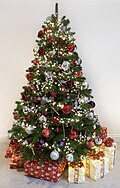 Christmas tree
 -
 Christmas tree
 -
 Christmas tree
 -
 Christmas tree
 -
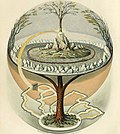 Christmas tree
 -
 Christmas tree
 -
 Christmas tree
 -
 Christmas tree
 -
 Christmas tree
 -
 Christmas tree
 -
 Christmas tree
 -
 Christmas tree


.jpg)
_109.jpg)


Ad. Transform your life with W8MD's
GLP-1 weight loss injections special from $29.99 with insurance
|
WikiMD Medical Encyclopedia |
Medical Disclaimer: WikiMD is for informational purposes only and is not a substitute for professional medical advice. Content may be inaccurate or outdated and should not be used for diagnosis or treatment. Always consult your healthcare provider for medical decisions. Verify information with trusted sources such as CDC.gov and NIH.gov. By using this site, you agree that WikiMD is not liable for any outcomes related to its content. See full disclaimer.
Credits:Most images are courtesy of Wikimedia commons, and templates, categories Wikipedia, licensed under CC BY SA or similar.
Translate this page: - East Asian
中文,
日本,
한국어,
South Asian
हिन्दी,
தமிழ்,
తెలుగు,
Urdu,
ಕನ್ನಡ,
Southeast Asian
Indonesian,
Vietnamese,
Thai,
မြန်မာဘာသာ,
বাংলা
European
español,
Deutsch,
français,
Greek,
português do Brasil,
polski,
română,
русский,
Nederlands,
norsk,
svenska,
suomi,
Italian
Middle Eastern & African
عربى,
Turkish,
Persian,
Hebrew,
Afrikaans,
isiZulu,
Kiswahili,
Other
Bulgarian,
Hungarian,
Czech,
Swedish,
മലയാളം,
मराठी,
ਪੰਜਾਬੀ,
ગુજરાતી,
Portuguese,
Ukrainian
