Bromomethane
Bromomethane, also known as methyl bromide, is a bromine-containing organic compound. It is colorless, odorless, nonflammable, and volatile.
Chemical Properties
Bromomethane is a haloalkane with the chemical formula CH3Br. It is a dense, colorless, slightly sweet-smelling liquid or gas. At room temperature, it is volatile; therefore, its gas is heavier than air. Bromomethane is soluble in organic solvents but only slightly soluble in water.
Production and Uses
Bromomethane is produced by the bromination of methane, which is a radical substitution reaction. It is primarily used as a fumigant and pesticide. It is also used in fire extinguishers, refrigeration systems, and as a precursor in the manufacture of other chemicals.
Health Effects
Exposure to bromomethane can lead to serious health effects. It is a potent neurotoxin, and inhalation can cause headache, dizziness, confusion, and, at high concentrations, seizures or even death. Chronic exposure can lead to neurological damage and impairment of the central nervous system.
Environmental Impact
Bromomethane is a significant ozone-depleting substance. It is also a potent greenhouse gas. Its use is restricted under the Montreal Protocol, an international treaty designed to protect the ozone layer.
See Also
This article is a Chemical compound-related stub. You can help WikiMD by expanding it!

Bromomethane
-
 Natta projection of bromomethane
 -
 China methyl bromide pallet
 -
 National Methyl Bromide extinguisher
 -
 Bromomethane
 -
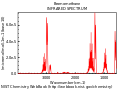 Bromomethane IR spectroscopy


Ad. Transform your life with W8MD's
GLP-1 weight loss injections special from $29.99 with insurance
|
WikiMD Medical Encyclopedia |
Medical Disclaimer: WikiMD is for informational purposes only and is not a substitute for professional medical advice. Content may be inaccurate or outdated and should not be used for diagnosis or treatment. Always consult your healthcare provider for medical decisions. Verify information with trusted sources such as CDC.gov and NIH.gov. By using this site, you agree that WikiMD is not liable for any outcomes related to its content. See full disclaimer.
Credits:Most images are courtesy of Wikimedia commons, and templates, categories Wikipedia, licensed under CC BY SA or similar.
Translate this page: - East Asian
中文,
日本,
한국어,
South Asian
हिन्दी,
தமிழ்,
తెలుగు,
Urdu,
ಕನ್ನಡ,
Southeast Asian
Indonesian,
Vietnamese,
Thai,
မြန်မာဘာသာ,
বাংলা
European
español,
Deutsch,
français,
Greek,
português do Brasil,
polski,
română,
русский,
Nederlands,
norsk,
svenska,
suomi,
Italian
Middle Eastern & African
عربى,
Turkish,
Persian,
Hebrew,
Afrikaans,
isiZulu,
Kiswahili,
Other
Bulgarian,
Hungarian,
Czech,
Swedish,
മലയാളം,
मराठी,
ਪੰਜਾਬੀ,
ગુજરાતી,
Portuguese,
Ukrainian
