Aid climbing
Aid Climbing

Aid climbing is a style of rock climbing in which climbers use equipment placed in the rock to support their weight and assist in their ascent. This technique is often employed when the natural features of the rock are insufficient for free climbing, where climbers rely solely on their physical strength and skill to ascend.
History
Aid climbing has its roots in the early days of mountaineering, where climbers used rudimentary tools and techniques to overcome difficult sections of rock. The development of specialized equipment, such as pitons, carabiners, and ascenders, has allowed aid climbing to evolve into a highly technical discipline. Notable figures in the history of aid climbing include Royal Robbins, who pioneered many routes in Yosemite National Park.

Techniques
Aid climbing involves the use of various tools and techniques to ascend a rock face. Key equipment includes:
- Ladders and aiders: These are used to step up and gain height when the rock face lacks sufficient holds.
- Daisy chains: Adjustable webbing loops that allow climbers to secure themselves to the rock while moving equipment.
- Skyhooks: Small hooks that can be placed over edges or in small pockets to support weight.
- Profilhaken: Specialized hooks used in aid climbing for thin cracks and seams.

Equipment
Aid climbing requires a variety of specialized equipment to ensure safety and efficiency. This includes:
- Cams and nuts: Used to protect the climber by placing them in cracks and crevices.
- Pitons: Metal spikes hammered into the rock.
- Ropes and harnesses: Essential for safety and support.
Notable Routes
Some of the most famous aid climbing routes are located in Yosemite National Park, including:
- The Nose on El Capitan: A classic aid route that has been climbed by many of the sport's pioneers.
- The Shield: Known for its challenging pitches and exposure.

Modern Aid Climbing
Today, aid climbing continues to be a vital part of the climbing community, with climbers pushing the limits of what is possible on rock faces around the world. Advances in equipment and techniques have allowed climbers to tackle increasingly difficult routes, such as those found on Cerro Torre and the Great Trango Tower.
Related Pages
Gallery
-
 Daisy chain in use
 -
 Skyhook placement
 -
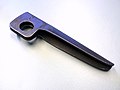 Profilhaken in a crack
 -
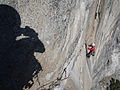 Aid climbing on El Capitan
 -
 Aid climbing in Mont Peney
 -
 Climbing El Capitan
 -
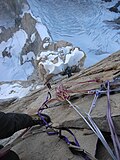 Cerro Torre headwall
 -
 Layton Kor in Eldorado
 -
 Craig DeMartino on Zodiac
 -
 Great Trango Tower


Ad. Transform your life with W8MD's Budget GLP-1 injections from $75


W8MD offers a medical weight loss program to lose weight in Philadelphia. Our physician-supervised medical weight loss provides:
- Weight loss injections in NYC (generic and brand names):
- Zepbound / Mounjaro, Wegovy / Ozempic, Saxenda
- Most insurances accepted or discounted self-pay rates. We will obtain insurance prior authorizations if needed.
- Generic GLP1 weight loss injections from $75 for the starting dose.
- Also offer prescription weight loss medications including Phentermine, Qsymia, Diethylpropion, Contrave etc.
NYC weight loss doctor appointmentsNYC weight loss doctor appointments
Start your NYC weight loss journey today at our NYC medical weight loss and Philadelphia medical weight loss clinics.
- Call 718-946-5500 to lose weight in NYC or for medical weight loss in Philadelphia 215-676-2334.
- Tags:NYC medical weight loss, Philadelphia lose weight Zepbound NYC, Budget GLP1 weight loss injections, Wegovy Philadelphia, Wegovy NYC, Philadelphia medical weight loss, Brookly weight loss and Wegovy NYC


|
WikiMD's Wellness Encyclopedia |
| Let Food Be Thy Medicine Medicine Thy Food - Hippocrates |
Medical Disclaimer: WikiMD is not a substitute for professional medical advice. The information on WikiMD is provided as an information resource only, may be incorrect, outdated or misleading, and is not to be used or relied on for any diagnostic or treatment purposes. Please consult your health care provider before making any healthcare decisions or for guidance about a specific medical condition. WikiMD expressly disclaims responsibility, and shall have no liability, for any damages, loss, injury, or liability whatsoever suffered as a result of your reliance on the information contained in this site. By visiting this site you agree to the foregoing terms and conditions, which may from time to time be changed or supplemented by WikiMD. If you do not agree to the foregoing terms and conditions, you should not enter or use this site. See full disclaimer.
Credits:Most images are courtesy of Wikimedia commons, and templates, categories Wikipedia, licensed under CC BY SA or similar.
Translate this page: - East Asian
中文,
日本,
한국어,
South Asian
हिन्दी,
தமிழ்,
తెలుగు,
Urdu,
ಕನ್ನಡ,
Southeast Asian
Indonesian,
Vietnamese,
Thai,
မြန်မာဘာသာ,
বাংলা
European
español,
Deutsch,
français,
Greek,
português do Brasil,
polski,
română,
русский,
Nederlands,
norsk,
svenska,
suomi,
Italian
Middle Eastern & African
عربى,
Turkish,
Persian,
Hebrew,
Afrikaans,
isiZulu,
Kiswahili,
Other
Bulgarian,
Hungarian,
Czech,
Swedish,
മലയാളം,
मराठी,
ਪੰਜਾਬੀ,
ગુજરાતી,
Portuguese,
Ukrainian
