Alpine transhumance
Alpine transhumance
-
 Alpine landscape around Tierfehd
 -
 Swiss cow in the Alps
 -
 Cattle drive in Kufstein 2005
 -
Schwägalp scenery
-
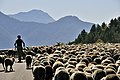 Transhumance in Parc National des Écrins
 -
 Arranged mountain cheese
 -
 Alpaufzug by Johann Jakob Hauswirth


Alpine Transhumance
Alpine transhumance refers to the traditional practice of moving livestock between fixed summer and winter pastures in the Alps. This practice is a form of pastoralism that has been used for centuries by communities in the Alpine regions of Europe.
Overview
Alpine transhumance involves the seasonal movement of herds, typically cattle, sheep, and goats, from lowland areas where they spend the winter months to high-altitude pastures in the mountains during the summer. This movement is essential for the optimal use of available grazing resources and is closely linked to the agricultural and cultural traditions of the Alpine peoples.
Historical Context
The practice of transhumance in the Alps dates back to prehistoric times and has been documented since the Middle Ages. It was a vital part of the economy in Alpine regions, allowing communities to maximize the use of their land resources. The movement of livestock was often accompanied by entire families, who would live in alpine huts or chalets during the summer months.
Cultural Significance
Transhumance is not only an economic activity but also a cultural tradition. It is associated with various festivals and rituals, such as the "Almabtrieb" or "désalpe", which marks the return of the herds to the valleys in autumn. These events are celebrated with music, dance, and traditional costumes, reflecting the deep-rooted connection between the people and their environment.
Modern Practices
While the practice of transhumance has declined in some areas due to industrialization and changes in agricultural practices, it remains an important tradition in many parts of the Alps. Modern transhumance often involves the use of vehicles to transport livestock, but the essential elements of the practice remain unchanged.
Environmental Impact
Transhumance plays a significant role in maintaining the biodiversity of alpine ecosystems. The grazing patterns of livestock help to prevent the overgrowth of vegetation and maintain open landscapes, which are important for various species of plants and animals.
Challenges
The practice of transhumance faces several challenges, including climate change, which affects the availability of pastures, and economic pressures that make it difficult for young people to continue the tradition. Efforts are being made to preserve this cultural heritage through subsidies and conservation programs.
Related Pages
| Agriculture |
|---|
|
[[File:
 |200px|center|alt=]] |200px|center|alt=]]
|
Ad. Transform your life with W8MD's
GLP-1 weight loss injections special from $29.99 with insurance
|
WikiMD Medical Encyclopedia |
Medical Disclaimer: WikiMD is for informational purposes only and is not a substitute for professional medical advice. Content may be inaccurate or outdated and should not be used for diagnosis or treatment. Always consult your healthcare provider for medical decisions. Verify information with trusted sources such as CDC.gov and NIH.gov. By using this site, you agree that WikiMD is not liable for any outcomes related to its content. See full disclaimer.
Credits:Most images are courtesy of Wikimedia commons, and templates, categories Wikipedia, licensed under CC BY SA or similar.
Translate this page: - East Asian
中文,
日本,
한국어,
South Asian
हिन्दी,
தமிழ்,
తెలుగు,
Urdu,
ಕನ್ನಡ,
Southeast Asian
Indonesian,
Vietnamese,
Thai,
မြန်မာဘာသာ,
বাংলা
European
español,
Deutsch,
français,
Greek,
português do Brasil,
polski,
română,
русский,
Nederlands,
norsk,
svenska,
suomi,
Italian
Middle Eastern & African
عربى,
Turkish,
Persian,
Hebrew,
Afrikaans,
isiZulu,
Kiswahili,
Other
Bulgarian,
Hungarian,
Czech,
Swedish,
മലയാളം,
मराठी,
ਪੰਜਾਬੀ,
ગુજરાતી,
Portuguese,
Ukrainian

