Acute decompensated heart failure
| Acute decompensated heart failure | |
|---|---|

| |
| Synonyms | ADHF |
| Pronounce | N/A |
| Specialty | Cardiology |
| Symptoms | Shortness of breath, fatigue, edema |
| Complications | Pulmonary edema, cardiogenic shock |
| Onset | Sudden |
| Duration | Variable |
| Types | N/A |
| Causes | Myocardial infarction, arrhythmia, hypertension, valvular heart disease |
| Risks | Coronary artery disease, diabetes mellitus, chronic kidney disease |
| Diagnosis | Clinical examination, echocardiography, chest X-ray |
| Differential diagnosis | Pneumonia, chronic obstructive pulmonary disease, pulmonary embolism |
| Prevention | N/A |
| Treatment | Diuretics, vasodilators, inotropes |
| Medication | Furosemide, nitroglycerin, dobutamine |
| Prognosis | Variable, depends on underlying cause and treatment |
| Frequency | Common |
| Deaths | Significant, especially in severe cases |
Acute decompensated heart failure


Acute decompensated heart failure (ADHF) is a sudden worsening of the signs and symptoms of heart failure, which typically includes difficulty breathing (dyspnea), leg or feet swelling, and fatigue. It is a common and potentially serious cause of acute respiratory distress.
Pathophysiology
ADHF is characterized by the rapid accumulation of fluid in the lungs due to the heart's inability to pump efficiently, leading to pulmonary edema. This condition can result from a variety of factors, including myocardial infarction, arrhythmias, or non-compliance with heart failure medications.
Clinical Presentation
Patients with ADHF often present with acute shortness of breath, orthopnea, and paroxysmal nocturnal dyspnea. Physical examination may reveal elevated jugular venous pressure (JVP), pulmonary rales, and peripheral edema, such as pedal edema.
Diagnosis
The diagnosis of ADHF is primarily clinical, supported by imaging and laboratory tests. A chest X-ray may show pulmonary congestion or edema, while an echocardiogram can assess cardiac function. Elevated levels of B-type natriuretic peptide (BNP) or N-terminal pro-BNP can also support the diagnosis.
Management
The management of ADHF involves stabilizing the patient, relieving symptoms, and addressing the underlying cause. Initial treatment often includes oxygen therapy, diuretics to reduce fluid overload, and vasodilators to decrease cardiac workload. In severe cases, inotropic agents or mechanical support may be necessary.
Prognosis
The prognosis of ADHF varies depending on the underlying cause and the patient's response to treatment. Early intervention and adherence to treatment regimens can improve outcomes and reduce the risk of recurrent episodes.
Related pages
Gallery
-
 Pulmonary edema as seen on chest X-ray
 -
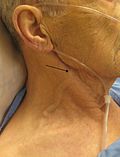 Elevated jugular venous pressure
 -
 Pedal edema
-
Pulmonary edema in acute decompensated heart failure
-
Elevated jugular venous pressure
-
Pedal edema in acute decompensated heart failure
Ad. Transform your life with W8MD's
GLP-1 weight loss injections special from $29.99 with insurance
|
WikiMD Medical Encyclopedia |
Medical Disclaimer: WikiMD is for informational purposes only and is not a substitute for professional medical advice. Content may be inaccurate or outdated and should not be used for diagnosis or treatment. Always consult your healthcare provider for medical decisions. Verify information with trusted sources such as CDC.gov and NIH.gov. By using this site, you agree that WikiMD is not liable for any outcomes related to its content. See full disclaimer.
Credits:Most images are courtesy of Wikimedia commons, and templates, categories Wikipedia, licensed under CC BY SA or similar.
Translate this page: - East Asian
中文,
日本,
한국어,
South Asian
हिन्दी,
தமிழ்,
తెలుగు,
Urdu,
ಕನ್ನಡ,
Southeast Asian
Indonesian,
Vietnamese,
Thai,
မြန်မာဘာသာ,
বাংলা
European
español,
Deutsch,
français,
Greek,
português do Brasil,
polski,
română,
русский,
Nederlands,
norsk,
svenska,
suomi,
Italian
Middle Eastern & African
عربى,
Turkish,
Persian,
Hebrew,
Afrikaans,
isiZulu,
Kiswahili,
Other
Bulgarian,
Hungarian,
Czech,
Swedish,
മലയാളം,
मराठी,
ਪੰਜਾਬੀ,
ગુજરાતી,
Portuguese,
Ukrainian
