Adiponitrile
Adiponitrile


Adiponitrile is an organic compound with the formula (CH_)_(CN)_. It is a nitrile, which is a type of organic compound containing a cyano group (_C_N). Adiponitrile is a key intermediate in the production of nylon, specifically nylon 6,6.
Structure and Properties
Adiponitrile is a colorless liquid with a faint odor. It is composed of a six-carbon chain with nitrile groups at each end. The chemical structure can be represented as NC(CH_)_CN. The presence of the nitrile groups makes adiponitrile a polar molecule, which affects its solubility and reactivity.
Synthesis
Adiponitrile is primarily produced through the hydrocyanation of butadiene. This process involves the addition of hydrogen cyanide (HCN) to butadiene to form adiponitrile. The reaction is catalyzed by nickel complexes. The overall reaction can be summarized as follows:

Another method of synthesis involves the electrochemical hydrodimerization of acrylonitrile.

Applications
The primary use of adiponitrile is in the production of hexamethylenediamine, which is a precursor to nylon 6,6. Nylon 6,6 is a widely used synthetic polymer with applications in textiles, automotive parts, and various consumer goods.
Safety and Handling
Adiponitrile is classified as a hazardous material. It is important to handle it with care, using appropriate personal protective equipment. It can cause irritation to the skin, eyes, and respiratory tract. In case of exposure, it is advised to seek medical attention immediately.
Related pages
Gallery
-
 Structural formula of adiponitrile
 -
 3D ball model of adiponitrile
 -
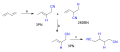 Hydrocyanation of butadiene to adiponitrile
 -
 Synthesis of adiponitrile from acrylonitrile
-
Structural formula of Adiponitrile
-
3D ball model of Adiponitrile
-
Butadiene Hydrocyanation process
-
Synthesis of Adiponitrile
Ad. Transform your life with W8MD's
GLP-1 weight loss injections special from $29.99 with insurance
|
WikiMD Medical Encyclopedia |
Medical Disclaimer: WikiMD is for informational purposes only and is not a substitute for professional medical advice. Content may be inaccurate or outdated and should not be used for diagnosis or treatment. Always consult your healthcare provider for medical decisions. Verify information with trusted sources such as CDC.gov and NIH.gov. By using this site, you agree that WikiMD is not liable for any outcomes related to its content. See full disclaimer.
Credits:Most images are courtesy of Wikimedia commons, and templates, categories Wikipedia, licensed under CC BY SA or similar.
Translate this page: - East Asian
中文,
日本,
한국어,
South Asian
हिन्दी,
தமிழ்,
తెలుగు,
Urdu,
ಕನ್ನಡ,
Southeast Asian
Indonesian,
Vietnamese,
Thai,
မြန်မာဘာသာ,
বাংলা
European
español,
Deutsch,
français,
Greek,
português do Brasil,
polski,
română,
русский,
Nederlands,
norsk,
svenska,
suomi,
Italian
Middle Eastern & African
عربى,
Turkish,
Persian,
Hebrew,
Afrikaans,
isiZulu,
Kiswahili,
Other
Bulgarian,
Hungarian,
Czech,
Swedish,
മലയാളം,
मराठी,
ਪੰਜਾਬੀ,
ગુજરાતી,
Portuguese,
Ukrainian
