Anatomical pathology
Study of the morphological aspects of disease
Anatomical pathology (also known as morphological pathology) is a medical specialty that is concerned with the diagnosis of disease based on the gross, microscopic, chemical, immunologic, and molecular examination of organs, tissues, and whole bodies (autopsy). Anatomical pathology is one of two branches of pathology, the other being clinical pathology, the diagnosis of disease through the laboratory analysis of bodily fluids and tissues.
Subspecialties
Anatomical pathology is divided into several subspecialties, including:
- Surgical pathology: The examination of tissues removed during surgery to help diagnose a disease and determine a treatment plan.
- Cytopathology: The study of individual cells in disease, often used in cancer diagnosis.
- Forensic pathology: The application of pathology to legal purposes, including the investigation of sudden or unexpected deaths.
- Dermatopathology: The study of skin diseases at a microscopic level.
- Neuropathology: The study of diseases of the nervous system tissue.
Techniques
Anatomical pathology involves a variety of techniques to examine tissues and cells:
- Histopathology: The examination of tissues under a microscope after they have been stained with special dyes.
- Immunohistochemistry: The use of antibodies to detect specific proteins in tissue sections.
- In situ hybridization: A technique used to locate specific DNA or RNA sequences in tissue sections.
- Electron microscopy: The use of electron microscopes to examine tissue at very high magnification.
Role in Medicine
Anatomical pathology plays a crucial role in the diagnosis and management of diseases. Pathologists work closely with other physicians to provide a definitive diagnosis, which is essential for determining the appropriate treatment. They also play a key role in cancer diagnosis, grading, and staging, which are critical for patient management.
Education and Training
To become an anatomical pathologist, one must complete medical school followed by a residency in pathology. This is often followed by a fellowship in a subspecialty area. Pathologists must be board certified to practice in many countries.
Related pages
Gallery
-
 An example of anamorphic development in Nemasoma.

-
 Breast invasive scirrhous carcinoma histopathology
 -
 Breast invasive scirrhous carcinoma histopathology HER2 expression
 -
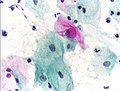 Pap test abnormal
 -
 Streptococcus pneumoniae meningitis, gross pathology
 -
 End-stage interstitial lung disease (honeycomb lung)
 -
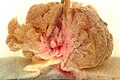 Villous adenoma of the sigmoid colon, gross pathology
.jpg)
_HER2_expression.JPG)


.jpg)

Ad. Transform your life with W8MD's
GLP-1 weight loss injections special from $29.99 with insurance
|
WikiMD Medical Encyclopedia |
Medical Disclaimer: WikiMD is for informational purposes only and is not a substitute for professional medical advice. Content may be inaccurate or outdated and should not be used for diagnosis or treatment. Always consult your healthcare provider for medical decisions. Verify information with trusted sources such as CDC.gov and NIH.gov. By using this site, you agree that WikiMD is not liable for any outcomes related to its content. See full disclaimer.
Credits:Most images are courtesy of Wikimedia commons, and templates, categories Wikipedia, licensed under CC BY SA or similar.
Translate this page: - East Asian
中文,
日本,
한국어,
South Asian
हिन्दी,
தமிழ்,
తెలుగు,
Urdu,
ಕನ್ನಡ,
Southeast Asian
Indonesian,
Vietnamese,
Thai,
မြန်မာဘာသာ,
বাংলা
European
español,
Deutsch,
français,
Greek,
português do Brasil,
polski,
română,
русский,
Nederlands,
norsk,
svenska,
suomi,
Italian
Middle Eastern & African
عربى,
Turkish,
Persian,
Hebrew,
Afrikaans,
isiZulu,
Kiswahili,
Other
Bulgarian,
Hungarian,
Czech,
Swedish,
മലയാളം,
मराठी,
ਪੰਜਾਬੀ,
ગુજરાતી,
Portuguese,
Ukrainian
