Argininemia
Argininemia
Argininemia is a rare autosomal recessive metabolic disorder that is characterized by a deficiency in the enzyme arginase, which is part of the urea cycle. This condition leads to an accumulation of arginine and ammonia in the blood, resulting in a variety of symptoms and complications.
Pathophysiology
Argininemia is caused by mutations in the ARG1 gene, which provides instructions for making the enzyme arginase. Arginase is responsible for breaking down arginine into ornithine and urea, a process that is crucial for the removal of excess nitrogen from the body. In individuals with argininemia, the lack of functional arginase leads to elevated levels of arginine and ammonia, which can be toxic to the body, particularly the nervous system.
Symptoms
The symptoms of argininemia can vary but often include:
- Developmental delay
- Intellectual disability
- Spasticity
- Seizures
- Growth retardation
- Microcephaly
These symptoms typically appear in early childhood, although the severity and onset can vary among individuals.
Diagnosis
Argininemia is diagnosed through a combination of clinical evaluation, biochemical tests, and genetic testing. Elevated levels of arginine in the blood and urine are indicative of the disorder. Genetic testing can confirm mutations in the ARG1 gene.
Treatment
Management of argininemia involves dietary restrictions to limit arginine intake and the use of medications to reduce ammonia levels. A low-protein diet supplemented with essential amino acids, excluding arginine, is often recommended. Medications such as sodium benzoate or sodium phenylbutyrate may be used to help remove excess ammonia from the body.
Prognosis
The prognosis for individuals with argininemia varies depending on the severity of the condition and the effectiveness of treatment. Early diagnosis and management can improve outcomes and reduce the risk of severe complications.
Related pages
Gallery
-
Diagram illustrating the urea cycle, highlighting the role of arginase.
-
 Structure of Arginine
 -
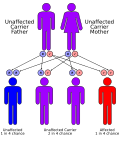 Autosomal Recessive Inheritance Pattern
 -
 Structure of Glycerol Phenylbutyrate


Ad. Transform your life with W8MD's
GLP-1 weight loss injections special from $29.99 with insurance
|
WikiMD Medical Encyclopedia |
Medical Disclaimer: WikiMD is for informational purposes only and is not a substitute for professional medical advice. Content may be inaccurate or outdated and should not be used for diagnosis or treatment. Always consult your healthcare provider for medical decisions. Verify information with trusted sources such as CDC.gov and NIH.gov. By using this site, you agree that WikiMD is not liable for any outcomes related to its content. See full disclaimer.
Credits:Most images are courtesy of Wikimedia commons, and templates, categories Wikipedia, licensed under CC BY SA or similar.
Translate this page: - East Asian
中文,
日本,
한국어,
South Asian
हिन्दी,
தமிழ்,
తెలుగు,
Urdu,
ಕನ್ನಡ,
Southeast Asian
Indonesian,
Vietnamese,
Thai,
မြန်မာဘာသာ,
বাংলা
European
español,
Deutsch,
français,
Greek,
português do Brasil,
polski,
română,
русский,
Nederlands,
norsk,
svenska,
suomi,
Italian
Middle Eastern & African
عربى,
Turkish,
Persian,
Hebrew,
Afrikaans,
isiZulu,
Kiswahili,
Other
Bulgarian,
Hungarian,
Czech,
Swedish,
മലയാളം,
मराठी,
ਪੰਜਾਬੀ,
ગુજરાતી,
Portuguese,
Ukrainian

