Diacetyl

Diacetyl (chemical formula: C4H6O2) is an organic compound with the chemical structure of two ketone groups attached to a two-carbon chain. It is a yellowish-green liquid with an intensely buttery flavor, making it a popular additive in food products, especially in butter flavorings for popcorn, baking, and confectionery. Despite its widespread use in the food industry, diacetyl has been associated with health concerns, particularly respiratory issues in workers exposed to high levels of this chemical in manufacturing settings.
Production
Diacetyl is naturally produced in fermented beverages and dairy products through the metabolism of sugars by certain yeast and bacteria. It can also be synthesized chemically from butane or by the oxidation of 2,3-butanediol.
Uses
In the food industry, diacetyl is valued for its distinctive buttery flavor. It is used as a flavoring agent in a variety of products, including butter, margarine, oils, and snacks. Beyond its culinary applications, diacetyl is also used in the tobacco industry to enhance the flavor of smoke products and in the chemical industry as a starting material for the synthesis of other chemicals.
Health Concerns
The safety of diacetyl has come under scrutiny due to its association with a rare lung disease known as bronchiolitis obliterans, colloquially referred to as "popcorn lung." This condition was first identified in workers at microwave popcorn packaging plants who inhaled significant amounts of diacetyl over time. Symptoms of bronchiolitis obliterans include coughing, wheezing, and shortness of breath. These health concerns have led to increased regulatory attention and the adoption of safety measures in workplaces where diacetyl exposure occurs.
Regulation
In response to health concerns, regulatory agencies in several countries have established exposure limits for diacetyl in the workplace. These regulations aim to protect workers by ensuring adequate ventilation and the use of personal protective equipment (PPE) in environments where diacetyl is present.
Alternatives
Due to the health risks associated with diacetyl, the food industry has been exploring alternative substances that can replicate its buttery flavor without posing a risk to health. Some of these alternatives include acetoin and 2,3-butanediol, which are structurally similar to diacetyl but are considered to be safer for use in flavorings.
Conclusion
While diacetyl contributes a desirable buttery flavor to food products, its association with serious health risks cannot be overlooked. The ongoing research into safer alternatives and the implementation of regulatory measures are crucial steps in mitigating the risks associated with diacetyl exposure.

Diacetyl
-
 Diacetyl chemical structure
 -
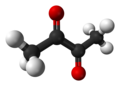 Diacetyl 3D ball model
 -
 Butter Vanille Aroma


Medical Disclaimer: WikiMD is for informational purposes only and is not a substitute for professional medical advice. Content may be inaccurate or outdated and should not be used for diagnosis or treatment. Always consult your healthcare provider for medical decisions. Verify information with trusted sources such as CDC.gov and NIH.gov. By using this site, you agree that WikiMD is not liable for any outcomes related to its content. See full disclaimer.
Credits:Most images are courtesy of Wikimedia commons, and templates, categories Wikipedia, licensed under CC BY SA or similar.
Translate this page: - East Asian
中文,
日本,
한국어,
South Asian
हिन्दी,
தமிழ்,
తెలుగు,
Urdu,
ಕನ್ನಡ,
Southeast Asian
Indonesian,
Vietnamese,
Thai,
မြန်မာဘာသာ,
বাংলা
European
español,
Deutsch,
français,
Greek,
português do Brasil,
polski,
română,
русский,
Nederlands,
norsk,
svenska,
suomi,
Italian
Middle Eastern & African
عربى,
Turkish,
Persian,
Hebrew,
Afrikaans,
isiZulu,
Kiswahili,
Other
Bulgarian,
Hungarian,
Czech,
Swedish,
മലയാളം,
मराठी,
ਪੰਜਾਬੀ,
ગુજરાતી,
Portuguese,
Ukrainian
