Calcinosis cutis
Calcinosis cutis refers to a group of disorders characterized by the deposition of calcium salts in the skin. This condition can manifest in various forms, depending on the underlying cause, and can affect any part of the body, though it most commonly occurs in the skin. The calcium deposits may be painful and can lead to skin ulcers or infections. Calcinosis cutis is divided into four main types: dystrophic, metastatic, idiopathic, and iatrogenic.
Types of Calcinosis Cutis
Dystrophic Calcinosis Cutis
Dystrophic calcinosis cutis is the most common form. It occurs in the presence of normal serum calcium and phosphate levels and is usually associated with tissue damage or a pre-existing skin condition, such as systemic sclerosis, dermatomyositis, or lupus erythematosus. The damage or inflammation in the tissue leads to calcium deposition.
Metastatic Calcinosis Cutis
Metastatic calcinosis cutis involves calcium deposits in the skin resulting from elevated serum calcium or phosphate levels. This condition can be caused by hyperparathyroidism, renal failure, or other diseases that disrupt the balance of calcium and phosphate.
Idiopathic Calcinosis Cutis
Idiopathic calcinosis cutis occurs without any apparent cause, with normal serum levels of calcium and phosphate. This rare form can manifest as single or multiple nodules and is often seen in pediatric patients.
Iatrogenic Calcinosis Cutis
Iatrogenic calcinosis cutis is caused by medical treatment, such as intravenous calcium administration or the use of calcium-containing electrodes in electrotherapy. This type of calcinosis cutis is preventable and usually resolves once the causative agent is removed.
Symptoms
Symptoms of calcinosis cutis vary depending on the type and severity but commonly include hard, white or yellowish papules, nodules, or plaques on the skin. These lesions may be tender or painful and can ulcerate, leading to infections. The affected areas are often over joints or in pressure points.
Diagnosis
Diagnosis of calcinosis cutis involves a thorough medical history and physical examination, followed by imaging studies such as X-rays, CT scans, or MRI to visualize calcium deposits. A skin biopsy may also be performed to confirm the diagnosis and rule out other conditions.
Treatment
Treatment of calcinosis cutis aims to manage symptoms and, when possible, address the underlying cause. Options include topical or intralesional steroids, calcium channel blockers, bisphosphonates, and surgical removal of the deposits. However, treatment can be challenging, and the condition may recur.
Prevention
Prevention of calcinosis cutis focuses on managing underlying conditions and avoiding factors that may trigger calcium deposition. Regular monitoring and treatment adjustments for patients with known risk factors are essential.

-
 Calcinosis cutis in a new case
 -
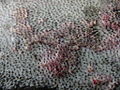 Calcinosis cutis in a dog
 -
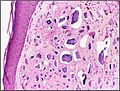 Calcinosis cutis


Ad. Transform your life with W8MD's
GLP-1 weight loss injections special from $29.99 with insurance
|
WikiMD Medical Encyclopedia |
Medical Disclaimer: WikiMD is for informational purposes only and is not a substitute for professional medical advice. Content may be inaccurate or outdated and should not be used for diagnosis or treatment. Always consult your healthcare provider for medical decisions. Verify information with trusted sources such as CDC.gov and NIH.gov. By using this site, you agree that WikiMD is not liable for any outcomes related to its content. See full disclaimer.
Credits:Most images are courtesy of Wikimedia commons, and templates, categories Wikipedia, licensed under CC BY SA or similar.
Translate this page: - East Asian
中文,
日本,
한국어,
South Asian
हिन्दी,
தமிழ்,
తెలుగు,
Urdu,
ಕನ್ನಡ,
Southeast Asian
Indonesian,
Vietnamese,
Thai,
မြန်မာဘာသာ,
বাংলা
European
español,
Deutsch,
français,
Greek,
português do Brasil,
polski,
română,
русский,
Nederlands,
norsk,
svenska,
suomi,
Italian
Middle Eastern & African
عربى,
Turkish,
Persian,
Hebrew,
Afrikaans,
isiZulu,
Kiswahili,
Other
Bulgarian,
Hungarian,
Czech,
Swedish,
മലയാളം,
मराठी,
ਪੰਜਾਬੀ,
ગુજરાતી,
Portuguese,
Ukrainian
