Arthrodermataceae
Family of fungi
The Arthrodermataceae is a family of fungi within the order Onygenales. This family includes several genera that are of medical and veterinary importance due to their role in causing dermatophytosis, commonly known as ringworm, in humans and animals.
Characteristics
Members of the Arthrodermataceae family are characterized by their ability to degrade keratin, a fibrous structural protein found in skin, hair, and nails. This keratinolytic activity is a key feature that enables these fungi to colonize and infect keratinized tissues, leading to dermatophytic infections.
The fungi in this family are typically ascomycetes, meaning they reproduce sexually through the formation of ascospores within a specialized structure called an ascus. They can also reproduce asexually through the production of conidia, which are asexual spores that facilitate dissemination and infection.
Genera
The family Arthrodermataceae includes several genera, some of which are:
These genera include species that are well-known pathogens, such as Trichophyton rubrum and Microsporum canis, which are common causes of ringworm in humans and animals.
Pathogenicity
The pathogenic species within the Arthrodermataceae family are known as dermatophytes. They are responsible for a variety of infections, collectively referred to as dermatophytosis. These infections are typically superficial, affecting the skin, hair, and nails, but can cause significant discomfort and are highly contagious.
Dermatophytes are classified into three ecological groups based on their primary habitat:
- Anthropophilic: Preferring human hosts, e.g., Trichophyton rubrum.
- Zoophilic: Preferring animal hosts, e.g., Microsporum canis.
- Geophilic: Preferring soil, e.g., Nannizzia gypsea.
Medical Importance
Infections caused by dermatophytes are common worldwide and can affect individuals of all ages. The clinical manifestations of dermatophytosis vary depending on the site of infection and the species involved. Common forms include:
- Tinea pedis (athlete's foot)
- Tinea corporis (ringworm of the body)
- Tinea capitis (scalp ringworm)
- Tinea unguium (nail infection)
Treatment typically involves the use of topical or oral antifungal medications, depending on the severity and location of the infection.
Research and Applications
Research into the Arthrodermataceae family has provided insights into fungal pathogenicity, host-pathogen interactions, and the development of antifungal therapies. Understanding the genetic and biochemical pathways involved in keratin degradation has potential applications in biotechnology and medicine.
Gallery
-
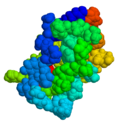 Aprotinin, a protein related to the study of Arthrodermataceae
 -
 Structural representation of a protein related to fungal studies


Related pages
Ad. Transform your life with W8MD's Budget GLP-1 injections from $75


W8MD offers a medical weight loss program to lose weight in Philadelphia. Our physician-supervised medical weight loss provides:
- Weight loss injections in NYC (generic and brand names):
- Zepbound / Mounjaro, Wegovy / Ozempic, Saxenda
- Most insurances accepted or discounted self-pay rates. We will obtain insurance prior authorizations if needed.
- Generic GLP1 weight loss injections from $75 for the starting dose.
- Also offer prescription weight loss medications including Phentermine, Qsymia, Diethylpropion, Contrave etc.
NYC weight loss doctor appointmentsNYC weight loss doctor appointments
Start your NYC weight loss journey today at our NYC medical weight loss and Philadelphia medical weight loss clinics.
- Call 718-946-5500 to lose weight in NYC or for medical weight loss in Philadelphia 215-676-2334.
- Tags:NYC medical weight loss, Philadelphia lose weight Zepbound NYC, Budget GLP1 weight loss injections, Wegovy Philadelphia, Wegovy NYC, Philadelphia medical weight loss, Brookly weight loss and Wegovy NYC


|
WikiMD's Wellness Encyclopedia |
| Let Food Be Thy Medicine Medicine Thy Food - Hippocrates |
Medical Disclaimer: WikiMD is not a substitute for professional medical advice. The information on WikiMD is provided as an information resource only, may be incorrect, outdated or misleading, and is not to be used or relied on for any diagnostic or treatment purposes. Please consult your health care provider before making any healthcare decisions or for guidance about a specific medical condition. WikiMD expressly disclaims responsibility, and shall have no liability, for any damages, loss, injury, or liability whatsoever suffered as a result of your reliance on the information contained in this site. By visiting this site you agree to the foregoing terms and conditions, which may from time to time be changed or supplemented by WikiMD. If you do not agree to the foregoing terms and conditions, you should not enter or use this site. See full disclaimer.
Credits:Most images are courtesy of Wikimedia commons, and templates, categories Wikipedia, licensed under CC BY SA or similar.
Translate this page: - East Asian
中文,
日本,
한국어,
South Asian
हिन्दी,
தமிழ்,
తెలుగు,
Urdu,
ಕನ್ನಡ,
Southeast Asian
Indonesian,
Vietnamese,
Thai,
မြန်မာဘာသာ,
বাংলা
European
español,
Deutsch,
français,
Greek,
português do Brasil,
polski,
română,
русский,
Nederlands,
norsk,
svenska,
suomi,
Italian
Middle Eastern & African
عربى,
Turkish,
Persian,
Hebrew,
Afrikaans,
isiZulu,
Kiswahili,
Other
Bulgarian,
Hungarian,
Czech,
Swedish,
മലയാളം,
मराठी,
ਪੰਜਾਬੀ,
ગુજરાતી,
Portuguese,
Ukrainian
