Wheat flour
Wheat flour is a powder made from the grinding of wheat used for human consumption. More wheat flour is produced than any other flour. Wheat varieties are called "soft" or "weak" if gluten content is low, and are called "hard" or "strong" if they have high gluten content. Hard flour, or bread flour, is high in gluten, with 12% to 14% gluten content, and its dough has elastic toughness that holds its shape well once baked. Soft flour is comparatively low in gluten and thus results in a loaf with a finer, crumbly texture. Soft flour is usually divided into cake flour, which is the lowest in gluten, and pastry flour, which has slightly more gluten than cake flour.
History
Wheat has been consumed by humans for thousands of years. The earliest archaeological evidence of wheat seeds found from an ancient site in Syria dates back to about 7800 BC. The cultivation of wheat began to spread beyond the Fertile Crescent after about 8000 BC. Wheat was cultivated in the Indian subcontinent from about 5000 BC. The ancient Egyptians were the first to grind wheat into flour and to make bread.
Types of Wheat Flour
There are several types of wheat flour distinguished by the amount of gluten they contain, their color, the parts of the grain used, and the type of wheat. Some of the most common types include:
- All-purpose flour: This is a blend of hard and soft wheat and is great for making light bread and cakes.
- Bread flour: This type of flour has more gluten than all-purpose flour. This means the bread will rise higher and have a consistent texture.
- Whole wheat flour: This type of flour includes the bran, germ and endosperm of the wheat grain which gives it a darker color and a higher fiber content.
- Cake flour: This is a finely milled flour made from soft wheat. It has lower protein content than all-purpose flour and is ideal for making cakes and cookies.
Health Benefits
Wheat flour is a nutritious product, as it is a source of essential nutrients such as protein, dietary fiber, vitamins and minerals. The whole wheat flour is considered healthier than the white refined one, as it contains all parts of the grain — the bran, germ, and endosperm. Foods made from these flours are rich in fiber, which aids in digestion and helps in maintaining a healthy weight.
See Also

Wheat Flour
-
 Wheat flour
 -
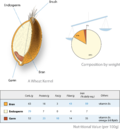 Wheat kernel nutrition


Ad. Transform your life with W8MD's
GLP-1 weight loss injections special from $29.99 with insurance
|
WikiMD Medical Encyclopedia |
Medical Disclaimer: WikiMD is for informational purposes only and is not a substitute for professional medical advice. Content may be inaccurate or outdated and should not be used for diagnosis or treatment. Always consult your healthcare provider for medical decisions. Verify information with trusted sources such as CDC.gov and NIH.gov. By using this site, you agree that WikiMD is not liable for any outcomes related to its content. See full disclaimer.
Credits:Most images are courtesy of Wikimedia commons, and templates, categories Wikipedia, licensed under CC BY SA or similar.
Translate this page: - East Asian
中文,
日本,
한국어,
South Asian
हिन्दी,
தமிழ்,
తెలుగు,
Urdu,
ಕನ್ನಡ,
Southeast Asian
Indonesian,
Vietnamese,
Thai,
မြန်မာဘာသာ,
বাংলা
European
español,
Deutsch,
français,
Greek,
português do Brasil,
polski,
română,
русский,
Nederlands,
norsk,
svenska,
suomi,
Italian
Middle Eastern & African
عربى,
Turkish,
Persian,
Hebrew,
Afrikaans,
isiZulu,
Kiswahili,
Other
Bulgarian,
Hungarian,
Czech,
Swedish,
മലയാളം,
मराठी,
ਪੰਜਾਬੀ,
ગુજરાતી,
Portuguese,
Ukrainian
