Korean tea
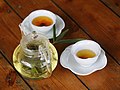
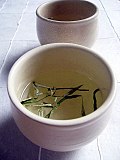
Korean tea is a broad term used to describe traditional Korean tisanes, which include both infusions of various leaves, flowers, bark, and fruit from plants other than Camellia sinensis, and the infusion of Camellia sinensis itself. Korean tea can be classified into several types based on several different factors such as the fermentation method, time of harvesting, and the plant itself.
History
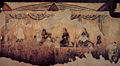
The history of Korean tea can be traced back to as early as the Goryeo Dynasty when tea offerings were made in Buddhist temples. Tea-drinking was also a common practice among Buddhist monks, who spread the culture to the rest of the society. The Joseon Dynasty, however, saw a decline in tea culture due to the government's discouragement of Buddhism and the rise of Confucianism, which did not have a tea-drinking tradition.
Types of Korean Tea
Korean tea can be divided into several categories, including green tea, black tea, and herbal tea.
Green Tea
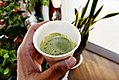
Green tea (Nokcha in Korean) is the most commonly consumed type of tea in Korea. It is made from the leaves of the Camellia sinensis plant, which are quickly dried to prevent too much oxidation from occurring that would turn the green leaves brown and alter their fresh-picked flavor.
Black Tea
Black tea (Hongcha in Korean) refers to tea that is wilted, sometimes crushed, and fully oxidized. This oxidation results in the characteristic dark brown to black color of the tea and gives it a richer flavor than green tea.
Herbal Tea
Herbal tea in Korea is referred to as tisane. Tisanes are usually not made from the leaves of the tea plant, but rather from a variety of other plants. Examples include Ginger tea, Ginseng tea, and Plum tea.
Tea Ceremony
The Korean tea ceremony or 'Darye' is a traditional form of tea ceremony practiced in Korea. Darye literally refers to "etiquette for tea" or "tea rite" and has been kept among Korean people for over a thousand years.
See Also


-
 Korean tea
 -
 Korean tea
 -
 Korean tea
 -
 Korean tea
 -
 Korean tea
 -
 Korean tea
 -
 Korean tea
 -
 Korean tea
 -
 Korean tea
 -
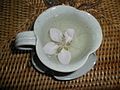 Korean tea
 -
 Korean tea
 -
Korean tea


Ad. Transform your health with W8MD Weight Loss, Sleep & MedSpa

Tired of being overweight?
Get started with evidence based, physician-supervised
affordable GLP-1 weight loss injections
Now available in New York City and Philadelphia:
- Semaglutide starting from $59.99/week and up
- Tirzepatide starting from $69.99/week and up (dose dependent)
✔ Evidence-based medical weight loss ✔ Insurance-friendly visits available ✔ Same-week appointments, evenings & weekends
Learn more:
Start your transformation today with W8MD weight loss centers.
|
WikiMD Medical Encyclopedia |
Medical Disclaimer: WikiMD is for informational purposes only and is not a substitute for professional medical advice. Content may be inaccurate or outdated and should not be used for diagnosis or treatment. Always consult your healthcare provider for medical decisions. Verify information with trusted sources such as CDC.gov and NIH.gov. By using this site, you agree that WikiMD is not liable for any outcomes related to its content. See full disclaimer.
Credits:Most images are courtesy of Wikimedia commons, and templates, categories Wikipedia, licensed under CC BY SA or similar.
Translate this page: - East Asian
中文,
日本,
한국어,
South Asian
हिन्दी,
தமிழ்,
తెలుగు,
Urdu,
ಕನ್ನಡ,
Southeast Asian
Indonesian,
Vietnamese,
Thai,
မြန်မာဘာသာ,
বাংলা
European
español,
Deutsch,
français,
Greek,
português do Brasil,
polski,
română,
русский,
Nederlands,
norsk,
svenska,
suomi,
Italian
Middle Eastern & African
عربى,
Turkish,
Persian,
Hebrew,
Afrikaans,
isiZulu,
Kiswahili,
Other
Bulgarian,
Hungarian,
Czech,
Swedish,
മലയാളം,
मराठी,
ਪੰਜਾਬੀ,
ગુજરાતી,
Portuguese,
Ukrainian

