Striptease
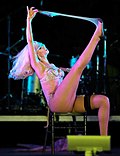
Striptease is a form of theatrical performance and entertainment that involves a performer undressing. While the act may include nudity, it does not necessarily have to. The purpose of a striptease is often to sexually excite or entertain an audience.
History
The origins of striptease as a performance art are disputed and various dates and occasions have been given from ancient Babylonia to 20th century America. The term "striptease" was first recorded in 1938, though "stripping", in the sense of women removing clothing to sexually excite men, seems to go back to at least the late 19th century.
Performance
Striptease involves a slow, sensuous undressing, with the audience urging the stripper to remove more clothing. The stripper may prolong the undressing with delaying tactics such as the wearing of additional clothes or putting clothes or hands in front of just undressed body parts such as the breasts or genitalia. The emphasis is on the act of undressing along with sexually suggestive movement, rather than the state of being undressed.
Legal and cultural aspects
Striptease and public nudity have been subject to legal and cultural prohibitions and other aesthetic considerations and taboos. Restrictions on venues may be through venue licensing requirements and constraints and a wide variety of national and local laws.
See also
References
<references />
 | |
|---|---|
 |
 |
-
 Striptease
 -
 Baker Banana 2
 -
 1720 Der spanische teutsche und niederlaendische Krieg p238
 -
 La Fontaine - Tales and Novels in verse - v2 p130
 -
 Mata Hari 15
 -
 Brunette Stag Film
 -
 Trapeze Disrobing Act (1901)
 -
 Windmill Theatre
 -
 Pole dancer 04
 -
 Pole dancer 03
 -
 Chippendales Las Vegas
 -
 Indigo Blue Miss Exotic World 2006


Ad. Transform your life with W8MD's
GLP-1 weight loss injections special from $29.99 with insurance
|
WikiMD Medical Encyclopedia |
Medical Disclaimer: WikiMD is for informational purposes only and is not a substitute for professional medical advice. Content may be inaccurate or outdated and should not be used for diagnosis or treatment. Always consult your healthcare provider for medical decisions. Verify information with trusted sources such as CDC.gov and NIH.gov. By using this site, you agree that WikiMD is not liable for any outcomes related to its content. See full disclaimer.
Credits:Most images are courtesy of Wikimedia commons, and templates, categories Wikipedia, licensed under CC BY SA or similar.
Translate this page: - East Asian
中文,
日本,
한국어,
South Asian
हिन्दी,
தமிழ்,
తెలుగు,
Urdu,
ಕನ್ನಡ,
Southeast Asian
Indonesian,
Vietnamese,
Thai,
မြန်မာဘာသာ,
বাংলা
European
español,
Deutsch,
français,
Greek,
português do Brasil,
polski,
română,
русский,
Nederlands,
norsk,
svenska,
suomi,
Italian
Middle Eastern & African
عربى,
Turkish,
Persian,
Hebrew,
Afrikaans,
isiZulu,
Kiswahili,
Other
Bulgarian,
Hungarian,
Czech,
Swedish,
മലയാളം,
मराठी,
ਪੰਜਾਬੀ,
ગુજરાતી,
Portuguese,
Ukrainian
