Arctic roll
A psychological disorder characterized by excessive fear or worry
Anxiety disorder is a mental health condition characterized by feelings of worry, anxiety, or fear that are strong enough to interfere with one's daily activities. These feelings may cause physical symptoms, such as a fast heart rate and shakiness. Anxiety disorders are a group of mental disorders characterized by significant feelings of anxiety and fear. Anxiety is a worry about future events, and fear is a reaction to current events. These feelings may cause physical symptoms, such as a fast heart rate and shakiness.
Types of Anxiety Disorders
Anxiety disorders are classified into several types, including:
- Generalized anxiety disorder (GAD): Characterized by chronic anxiety, exaggerated worry, and tension, even when there is little or nothing to provoke it.
- Panic disorder: Involves sudden and repeated attacks of intense fear that reach a peak within minutes (panic attacks).
- Social anxiety disorder: Also known as social phobia, involves overwhelming worry and self-consciousness about everyday social situations.
- Specific phobias: Intense fear of a specific object or situation, such as heights or flying.
- Agoraphobia: Fear of places or situations that might cause panic, helplessness, or embarrassment.
- Separation anxiety disorder: Excessive fear or anxiety about separation from home or an attachment figure.
Symptoms
Symptoms of anxiety disorders can vary depending on the type of disorder, but common symptoms include:
- Feeling nervous, restless, or tense
- Having a sense of impending danger, panic, or doom
- Increased heart rate
- Rapid breathing (hyperventilation)
- Sweating
- Trembling
- Feeling weak or tired
- Trouble concentrating or thinking about anything other than the present worry
- Having trouble sleeping
- Experiencing gastrointestinal (GI) problems
- Having difficulty controlling worry
- Having the urge to avoid things that trigger anxiety
Causes
The causes of anxiety disorders are complex and may include:
- Genetics: Anxiety disorders can run in families, suggesting that a combination of genes and environmental stresses can produce the disorders.
- Brain chemistry: Anxiety disorders may be linked to faulty circuits in the brain that control fear and emotions.
- Environmental factors: Stressful or traumatic events can trigger anxiety disorders in people who are already prone to anxiety.
- Medical factors: Certain medical conditions or medications can cause symptoms of anxiety.
Diagnosis
Diagnosis of anxiety disorders involves a comprehensive evaluation by a mental health professional. This may include:
- A physical exam to rule out other health conditions
- A psychological evaluation to discuss thoughts, feelings, and behavior patterns
- Comparing symptoms to the criteria in the Diagnostic and Statistical Manual of Mental Disorders (DSM-5)
Treatment
Treatment for anxiety disorders often includes a combination of therapy and medication. Common treatments include:
- Cognitive behavioral therapy (CBT): A type of psychotherapy that helps patients understand the thoughts and feelings that influence behaviors.
- Medications: Such as antidepressants, benzodiazepines, and beta-blockers.
- Lifestyle changes: Including stress management techniques, regular exercise, and a healthy diet.
Related pages
Gallery
-
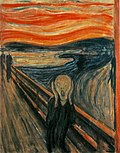 The Scream by Edvard Munch, often associated with anxiety and existential dread.

Ad. Transform your life with W8MD's
GLP-1 weight loss injections special from $29.99 with insurance
|
WikiMD Medical Encyclopedia |
Medical Disclaimer: WikiMD is for informational purposes only and is not a substitute for professional medical advice. Content may be inaccurate or outdated and should not be used for diagnosis or treatment. Always consult your healthcare provider for medical decisions. Verify information with trusted sources such as CDC.gov and NIH.gov. By using this site, you agree that WikiMD is not liable for any outcomes related to its content. See full disclaimer.
Credits:Most images are courtesy of Wikimedia commons, and templates, categories Wikipedia, licensed under CC BY SA or similar.
Translate this page: - East Asian
中文,
日本,
한국어,
South Asian
हिन्दी,
தமிழ்,
తెలుగు,
Urdu,
ಕನ್ನಡ,
Southeast Asian
Indonesian,
Vietnamese,
Thai,
မြန်မာဘာသာ,
বাংলা
European
español,
Deutsch,
français,
Greek,
português do Brasil,
polski,
română,
русский,
Nederlands,
norsk,
svenska,
suomi,
Italian
Middle Eastern & African
عربى,
Turkish,
Persian,
Hebrew,
Afrikaans,
isiZulu,
Kiswahili,
Other
Bulgarian,
Hungarian,
Czech,
Swedish,
മലയാളം,
मराठी,
ਪੰਜਾਬੀ,
ગુજરાતી,
Portuguese,
Ukrainian
