Ultramicrotomy
Ultramicrotomy
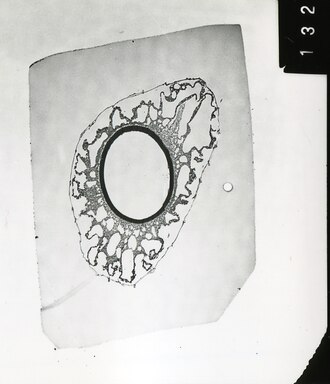

Ultramicrotomy is a technique used in the preparation of extremely thin sections of material for microscopy, particularly transmission electron microscopy (TEM). This method is essential for examining the fine details of biological and material specimens at the nanometer scale.
Technique
Ultramicrotomy involves the use of an ultramicrotome, a specialized instrument designed to cut sections that are typically less than 100 nanometers thick. The process begins with embedding the specimen in a suitable medium, such as epoxy resin, to provide support during sectioning. Once embedded, the sample is mounted on a specimen holder and trimmed to a suitable size.
The ultramicrotome uses a diamond or glass knife to slice the specimen into thin sections. The knife is mounted on a vibrating arm, which moves back and forth to cut the sample. The sections are floated onto a water surface and then collected onto a grid for examination under a microscope.
Applications
Ultramicrotomy is widely used in the fields of biology, materials science, and nanotechnology. In biology, it allows for the detailed study of cellular structures, such as organelles and membranes. In materials science, it is used to analyze the microstructure of polymers, metals, and composites.
Cryo-ultramicrotomy
Cryo-ultramicrotomy is a variation of the technique where the specimen is sectioned at cryogenic temperatures. This method is particularly useful for preserving the native state of biological samples, as it minimizes the damage caused by dehydration and chemical fixation. Cryo-ultramicrotomy is often used in conjunction with cryo-electron microscopy to study the structure of proteins and viruses.
Related pages
References
- Glauert, A. M., & Lewis, P. R. (1998). Biological Specimen Preparation for Transmission Electron Microscopy. Princeton University Press.
- Bozzola, J. J., & Russell, L. D. (1999). Electron Microscopy: Principles and Techniques for Biologists. Jones & Bartlett Learning.
Ad. Transform your health with W8MD Weight Loss, Sleep & MedSpa

Tired of being overweight?
Special offer:
Budget GLP-1 weight loss medications
- Semaglutide starting from $29.99/week and up with insurance for visit of $59.99 and up per week self pay.
- Tirzepatide starting from $45.00/week and up (dose dependent) or $69.99/week and up self pay
✔ Same-week appointments, evenings & weekends
Learn more:
- GLP-1 weight loss clinic NYC
- W8MD's NYC medical weight loss
- W8MD Philadelphia GLP-1 shots
- Philadelphia GLP-1 injections
- Affordable GLP-1 shots NYC
|
WikiMD Medical Encyclopedia |
Medical Disclaimer: WikiMD is for informational purposes only and is not a substitute for professional medical advice. Content may be inaccurate or outdated and should not be used for diagnosis or treatment. Always consult your healthcare provider for medical decisions. Verify information with trusted sources such as CDC.gov and NIH.gov. By using this site, you agree that WikiMD is not liable for any outcomes related to its content. See full disclaimer.
Credits:Most images are courtesy of Wikimedia commons, and templates, categories Wikipedia, licensed under CC BY SA or similar.
Translate this page: - East Asian
中文,
日本,
한국어,
South Asian
हिन्दी,
தமிழ்,
తెలుగు,
Urdu,
ಕನ್ನಡ,
Southeast Asian
Indonesian,
Vietnamese,
Thai,
မြန်မာဘာသာ,
বাংলা
European
español,
Deutsch,
français,
Greek,
português do Brasil,
polski,
română,
русский,
Nederlands,
norsk,
svenska,
suomi,
Italian
Middle Eastern & African
عربى,
Turkish,
Persian,
Hebrew,
Afrikaans,
isiZulu,
Kiswahili,
Other
Bulgarian,
Hungarian,
Czech,
Swedish,
മലയാളം,
मराठी,
ਪੰਜਾਬੀ,
ગુજરાતી,
Portuguese,
Ukrainian
