Exertional rhabdomyolysis: Difference between revisions
CSV import |
CSV import |
||
| Line 1: | Line 1: | ||
'''Exertional rhabdomyolysis''' is a medical condition characterized by the breakdown of [[muscle tissue]] that leads to the release of muscle fiber contents into the bloodstream. These substances are harmful to the [[kidney]] and often cause [[kidney damage]]. The condition is triggered by physical activity and is more likely to occur in individuals who engage in extreme or unfamiliar exercise, although it can also affect athletes who push their bodies beyond their limits. | {{SI}} {{Infobox medical condition | ||
| name = Exertional rhabdomyolysis | |||
| image = [[File:Motor_End_Plate_of_Rhabomyolysis.png|250px]] | |||
| caption = Micrograph showing muscle damage in exertional rhabdomyolysis | |||
| synonyms = Exercise-induced rhabdomyolysis | |||
| specialty = [[Sports medicine]], [[Emergency medicine]] | |||
| symptoms = [[Muscle pain]], [[muscle weakness]], [[swelling]], [[dark urine]] | |||
| complications = [[Acute kidney injury]], [[compartment syndrome]], [[electrolyte imbalance]] | |||
| onset = After intense physical activity | |||
| duration = Varies, can be days to weeks | |||
| causes = [[Strenuous exercise]], [[heat stress]], [[dehydration]] | |||
| risks = [[Dehydration]], [[genetic predisposition]], [[use of certain medications]] | |||
| diagnosis = [[Blood test]] (elevated [[creatine kinase]]), [[urinalysis]] | |||
| differential = [[Myositis]], [[muscle strain]], [[heat stroke]] | |||
| prevention = Adequate [[hydration]], gradual increase in exercise intensity | |||
| treatment = [[Intravenous fluids]], [[rest]], [[monitoring of kidney function]] | |||
| prognosis = Generally good with prompt treatment | |||
| frequency = Common in athletes and military personnel | |||
}}'''Exertional rhabdomyolysis''' is a medical condition characterized by the breakdown of [[muscle tissue]] that leads to the release of muscle fiber contents into the bloodstream. These substances are harmful to the [[kidney]] and often cause [[kidney damage]]. The condition is triggered by physical activity and is more likely to occur in individuals who engage in extreme or unfamiliar exercise, although it can also affect athletes who push their bodies beyond their limits. | |||
==Causes== | ==Causes== | ||
Exertional rhabdomyolysis can be caused by a variety of factors, including but not limited to: | Exertional rhabdomyolysis can be caused by a variety of factors, including but not limited to: | ||
| Line 9: | Line 26: | ||
* Genetic predispositions, such as metabolic myopathies or sickle cell trait | * Genetic predispositions, such as metabolic myopathies or sickle cell trait | ||
* Electrolyte imbalances, particularly low levels of [[potassium]] or [[sodium]] | * Electrolyte imbalances, particularly low levels of [[potassium]] or [[sodium]] | ||
==Symptoms== | ==Symptoms== | ||
Symptoms of exertional rhabdomyolysis include: | Symptoms of exertional rhabdomyolysis include: | ||
| Line 18: | Line 34: | ||
* Fatigue | * Fatigue | ||
* [[Fever]] | * [[Fever]] | ||
==Diagnosis== | ==Diagnosis== | ||
Diagnosis of exertional rhabdomyolysis is primarily based on the presence of clinical symptoms and is confirmed through laboratory tests, including: | Diagnosis of exertional rhabdomyolysis is primarily based on the presence of clinical symptoms and is confirmed through laboratory tests, including: | ||
| Line 25: | Line 40: | ||
* Elevated levels of [[potassium]], [[phosphorus]], and [[creatinine]] in the blood | * Elevated levels of [[potassium]], [[phosphorus]], and [[creatinine]] in the blood | ||
* Abnormal [[electrolyte]] levels | * Abnormal [[electrolyte]] levels | ||
==Treatment== | ==Treatment== | ||
Treatment for exertional rhabdomyolysis focuses on: | Treatment for exertional rhabdomyolysis focuses on: | ||
| Line 32: | Line 46: | ||
* Monitoring and managing electrolyte imbalances | * Monitoring and managing electrolyte imbalances | ||
* In severe cases, [[dialysis]] may be required to support kidney function | * In severe cases, [[dialysis]] may be required to support kidney function | ||
==Prevention== | ==Prevention== | ||
Preventive measures include: | Preventive measures include: | ||
| Line 39: | Line 52: | ||
* Avoiding exercise in extreme heat and humidity | * Avoiding exercise in extreme heat and humidity | ||
* Listening to one's body and recognizing the signs of overexertion | * Listening to one's body and recognizing the signs of overexertion | ||
==Complications== | ==Complications== | ||
If not treated promptly, exertional rhabdomyolysis can lead to serious complications, including: | If not treated promptly, exertional rhabdomyolysis can lead to serious complications, including: | ||
| Line 45: | Line 57: | ||
* Electrolyte imbalances leading to [[cardiac arrhythmia]] | * Electrolyte imbalances leading to [[cardiac arrhythmia]] | ||
* Compartment syndrome, a condition where increased pressure within the muscles causes severe pain and potential muscle damage | * Compartment syndrome, a condition where increased pressure within the muscles causes severe pain and potential muscle damage | ||
==Exertional_rhabdomyolysis gallery== | |||
<gallery> | |||
File:Actin_and_Myosin_filament_breakdown_with_Rhabdomyolysis.png|Actin and myosin filament breakdown in rhabdomyolysis | |||
File:Renal_Tubules_of_Exertional_Rhabdomyolysis.png|Renal tubules affected by exertional rhabdomyolysis | |||
File:Compartment_Syndrome_in_Muscle_(cleaned_up)_(annotated).jpg|Compartment syndrome in muscle | |||
</gallery> | |||
==See Also== | ==See Also== | ||
* [[Myopathy]] | * [[Myopathy]] | ||
| Line 51: | Line 68: | ||
* [[Electrolyte imbalance]] | * [[Electrolyte imbalance]] | ||
* [[Compartment syndrome]] | * [[Compartment syndrome]] | ||
[[Category:Musculoskeletal disorders]] | [[Category:Musculoskeletal disorders]] | ||
[[Category:Kidney diseases]] | [[Category:Kidney diseases]] | ||
[[Category:Exercise physiology]] | [[Category:Exercise physiology]] | ||
{{medicine-stub}} | {{medicine-stub}} | ||
Latest revision as of 02:01, 6 April 2025

Editor-In-Chief: Prab R Tumpati, MD
Obesity, Sleep & Internal medicine
Founder, WikiMD Wellnesspedia &
W8MD medical weight loss NYC and sleep center NYC
| Exertional rhabdomyolysis | |
|---|---|

| |
| Synonyms | Exercise-induced rhabdomyolysis |
| Pronounce | N/A |
| Specialty | Sports medicine, Emergency medicine |
| Symptoms | Muscle pain, muscle weakness, swelling, dark urine |
| Complications | Acute kidney injury, compartment syndrome, electrolyte imbalance |
| Onset | After intense physical activity |
| Duration | Varies, can be days to weeks |
| Types | N/A |
| Causes | Strenuous exercise, heat stress, dehydration |
| Risks | Dehydration, genetic predisposition, use of certain medications |
| Diagnosis | Blood test (elevated creatine kinase), urinalysis |
| Differential diagnosis | Myositis, muscle strain, heat stroke |
| Prevention | Adequate hydration, gradual increase in exercise intensity |
| Treatment | Intravenous fluids, rest, monitoring of kidney function |
| Medication | N/A |
| Prognosis | Generally good with prompt treatment |
| Frequency | Common in athletes and military personnel |
| Deaths | N/A |
Exertional rhabdomyolysis is a medical condition characterized by the breakdown of muscle tissue that leads to the release of muscle fiber contents into the bloodstream. These substances are harmful to the kidney and often cause kidney damage. The condition is triggered by physical activity and is more likely to occur in individuals who engage in extreme or unfamiliar exercise, although it can also affect athletes who push their bodies beyond their limits.
Causes[edit]
Exertional rhabdomyolysis can be caused by a variety of factors, including but not limited to:
- Intense physical activity, especially in hot and humid conditions
- A sudden increase in exercise intensity or duration
- Lack of proper conditioning or acclimatization to high-intensity workouts
- Certain medications and supplements, including statins, stimulants, and caffeine
- Genetic predispositions, such as metabolic myopathies or sickle cell trait
- Electrolyte imbalances, particularly low levels of potassium or sodium
Symptoms[edit]
Symptoms of exertional rhabdomyolysis include:
- Muscle pain and stiffness
- Muscle weakness
- Dark, tea-colored urine, a result of myoglobin being released into the bloodstream and filtered by the kidneys
- Decreased urine output
- Fatigue
- Fever
Diagnosis[edit]
Diagnosis of exertional rhabdomyolysis is primarily based on the presence of clinical symptoms and is confirmed through laboratory tests, including:
- Elevated levels of creatine kinase (CK), an enzyme found in the muscles
- Presence of myoglobin in the urine
- Elevated levels of potassium, phosphorus, and creatinine in the blood
- Abnormal electrolyte levels
Treatment[edit]
Treatment for exertional rhabdomyolysis focuses on:
- Immediate cessation of exercise
- Aggressive hydration to flush out the harmful substances from the bloodstream and protect the kidneys
- Monitoring and managing electrolyte imbalances
- In severe cases, dialysis may be required to support kidney function
Prevention[edit]
Preventive measures include:
- Gradually increasing the intensity and duration of workouts
- Staying hydrated and maintaining electrolyte balance
- Avoiding exercise in extreme heat and humidity
- Listening to one's body and recognizing the signs of overexertion
Complications[edit]
If not treated promptly, exertional rhabdomyolysis can lead to serious complications, including:
- Acute kidney injury
- Electrolyte imbalances leading to cardiac arrhythmia
- Compartment syndrome, a condition where increased pressure within the muscles causes severe pain and potential muscle damage
Exertional_rhabdomyolysis gallery[edit]
-
 Actin and myosin filament breakdown in rhabdomyolysis
 -
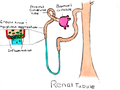 Renal tubules affected by exertional rhabdomyolysis
 -
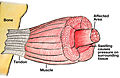 Compartment syndrome in muscle


_(annotated).jpg)
See Also[edit]

