Balancing selection: Difference between revisions
CSV import Tags: mobile edit mobile web edit |
CSV import |
||
| Line 27: | Line 27: | ||
[[Category:Genetics]] | [[Category:Genetics]] | ||
{{medicine-stub}} | {{medicine-stub}} | ||
<gallery> | |||
File:sicklecells.jpg|Sickle cells | |||
File:Malaria versus sickle-cell trait distributions.png|Malaria versus sickle-cell trait distributions | |||
File:Schneckesnail1.jpg|Schnecke snail | |||
File:Cepaea nemoralis active pair on tree trunk.jpg|Cepaea nemoralis active pair on tree trunk | |||
File:Drosophila polytene chromosomes 2.jpg|Drosophila polytene chromosomes | |||
</gallery> | |||
Latest revision as of 06:05, 3 March 2025
Balancing selection refers to a variety of natural selection processes by which genetic diversity is maintained within a population. Unlike directional selection, which pushes a population's genetic variance towards a single, advantageous allele, balancing selection favors the maintenance of multiple alleles at a given locus. This can occur through several mechanisms, including heterozygote advantage, frequency-dependent selection, and environmental heterogeneity.
Mechanisms[edit]
Heterozygote Advantage[edit]
One of the most studied mechanisms of balancing selection is the heterozygote advantage, where individuals who are heterozygous at a particular gene locus have a higher fitness than either homozygous form. A classic example is the sickle cell trait in humans. The heterozygous genotype confers resistance to malaria, which is advantageous in regions where the disease is prevalent, while avoiding the detrimental effects of sickle cell anemia that affect homozygous individuals.
Frequency-Dependent Selection[edit]
Frequency-dependent selection occurs when the fitness of a phenotype depends on its frequency relative to other phenotypes in the population. In negative frequency-dependent selection, rare phenotypes have a selective advantage simply because they are rare, which helps maintain genetic variation within the population. An example is the maintenance of different flower color morphs in certain plant species, where pollinators may preferentially visit less common colors.
Environmental Heterogeneity[edit]
Environmental heterogeneity refers to the variation in environmental conditions over space or time that can maintain genetic diversity through balancing selection. Different genotypes may be favored in different environments, allowing for the coexistence of multiple alleles within the larger population. This mechanism is evident in species that inhabit diverse or fluctuating environments, where the selective pressures vary spatially or temporally.
Consequences[edit]
The primary consequence of balancing selection is the maintenance of genetic diversity within a population. This diversity can provide a buffer against environmental changes, as it increases the likelihood that some individuals within the population will possess alleles that are advantageous under new conditions. Additionally, balancing selection can contribute to the evolution of new species by maintaining genetic differences that can lead to speciation under the right conditions.
Examples[edit]
Apart from the sickle cell trait, other examples of balancing selection include the major histocompatibility complex (MHC) in vertebrates, which is crucial for the immune system, and the tay-sachs disease carrier status in humans, where heterozygotes are thought to have had a selective advantage in certain environments.
See Also[edit]

-
 Sickle cells
 -
 Malaria versus sickle-cell trait distributions
 -
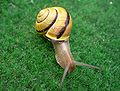 Schnecke snail
 -
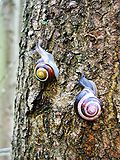 Cepaea nemoralis active pair on tree trunk
 -
 Drosophila polytene chromosomes


