Mind uploading: Difference between revisions
CSV import |
CSV import |
||
| Line 33: | Line 33: | ||
{{futurism-stub}} | {{futurism-stub}} | ||
== Mind uploading gallery == | |||
<gallery> | |||
File:Whole brain emulation.svg|Whole brain emulation | |||
File:User-FastFission-brain.gif|User FastFission brain | |||
File:Connectome extraction procedure.jpg|Connectome extraction procedure | |||
File:Magnetoencephalography.svg|Magnetoencephalography | |||
</gallery> | |||
Latest revision as of 05:53, 3 March 2025
Mind uploading, also known as whole brain emulation (WBE) or mind transfer, is a hypothetical process that involves scanning a particular brain structure's detailed state and copying it to a computer system or another computational device. The goal is to create a functional digital copy or simulation of the conscious mind, effectively allowing a person's identity, memories, and personality to be transferred from their biological brain to a non-biological platform. This concept raises profound questions in the realms of philosophy, ethics, computational neuroscience, and artificial intelligence.
Overview[edit]
Mind uploading is predicated on the idea that the conscious mind is fundamentally information-based, and that the complex set of neural connections and patterns in the brain can be accurately mapped and replicated on a different substrate. This process would involve a detailed understanding of the neuronal structure and functionality of the brain, advanced imaging technology for capturing this structure, and significant advancements in computing technology to simulate the brain's activities.
Technological Requirements[edit]
The successful implementation of mind uploading would require breakthroughs in several key areas:
- Neuroscience: A comprehensive map of the brain, known as a connectome, detailing all neural connections and their functions.
- Imaging technology: High-resolution brain scanning technologies capable of capturing the connectome in sufficient detail.
- Computational neuroscience: Models that can accurately simulate the workings of the brain, including the processing of information and the generation of consciousness.
- Computing technology: Hardware with enough processing power and storage capacity to run detailed brain simulations.
Ethical and Philosophical Considerations[edit]
Mind uploading raises numerous ethical and philosophical questions:
- Identity and Continuity: Whether a digital copy of a mind is the same as the original and whether personal identity is preserved after uploading.
- Consciousness: The nature of consciousness and whether a digital mind can truly be conscious.
- Rights and Status: The legal and social status of uploaded minds, including rights and responsibilities.
- Societal Impact: The potential societal changes resulting from widespread mind uploading, including issues of inequality and access.
Current State and Future Prospects[edit]
As of now, mind uploading remains a theoretical concept. Current technology does not yet allow for the high-resolution brain scanning, nor the computational power required for whole brain emulation. However, research in related fields such as artificial intelligence, neuroscience, and computational neuroscience is contributing to a better understanding of the brain's workings, which could eventually make mind uploading feasible.
See Also[edit]
Mind uploading gallery[edit]
-
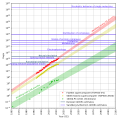 Whole brain emulation
 -
 User FastFission brain
 -
 Connectome extraction procedure
 -
 Magnetoencephalography


