Axon guidance: Difference between revisions
CSV import |
CSV import |
||
| Line 36: | Line 36: | ||
{{Neuroscience-stub}} | {{Neuroscience-stub}} | ||
{{Developmental-biology-stub}} | {{Developmental-biology-stub}} | ||
== Axon guidance gallery == | |||
<gallery> | |||
File:Axonal pathfinding and fasciculation behaviour in the embryonic ventral nerve cord of Drosophila.jpg|Axonal pathfinding and fasciculation behaviour in the embryonic ventral nerve cord of Drosophila | |||
</gallery> | |||
Latest revision as of 05:25, 3 March 2025
Axon guidance is a critical process in the development of the nervous system that ensures the proper wiring of neurons. It involves the navigation of axons to their target destinations during neurogenesis. This complex process is mediated by a variety of molecular cues and their receptors, which guide axons through the developing brain and spinal cord to establish functional synaptic connections.
Mechanisms of Axon Guidance[edit]
Axon guidance is governed by four main mechanisms: attraction, repulsion, adhesion, and degradation. These mechanisms are influenced by various molecular cues, including growth factors, chemokines, and extracellular matrix proteins.
Attraction[edit]
Axons are attracted to their target areas by specific attractive cues. One well-known family of attractive cues is the netrins, which bind to DCC receptors on axons, guiding them towards sources of high netrin concentration.
Repulsion[edit]
Conversely, some cues repel axons, preventing them from growing into inappropriate areas. The Slit family of proteins and their Robo receptors are key players in repulsive guidance, ensuring axons do not cross the midline of the nervous system more than once.
Adhesion[edit]
Cell adhesion molecules (CAMs) facilitate axon guidance by promoting adhesion between the axon and its surrounding environment. This interaction can guide axons along specific pathways via a mechanism known as haptotaxis.
Degradation[edit]
Extracellular matrix degradation also plays a role in axon guidance, clearing paths for axons to reach their targets. Enzymes such as matrix metalloproteinases are involved in this process, breaking down extracellular matrix components to facilitate axon pathfinding.
Molecular Cues and Receptors[edit]
Several families of molecular cues and their corresponding receptors are involved in axon guidance, including:
- Ephrins and Eph receptors: Involved in both attractive and repulsive axon guidance.
- Semaphorins and plexin/neuropilin receptors: Primarily mediate repulsive guidance.
- Netrins and DCC/Unc5 receptors: Can mediate both attraction and repulsion.
- Slit proteins and Robo receptors: Mainly involved in repulsive guidance.
Clinical Significance[edit]
Aberrations in axon guidance processes can lead to a variety of neurological disorders, including congenital mirror movement disorder, horizontal gaze palsy with progressive scoliosis, and certain forms of intellectual disability. Understanding the molecular mechanisms of axon guidance has implications for developing therapeutic strategies for these conditions.
Research and Future Directions[edit]
Research in axon guidance continues to uncover the complex interplay of molecular cues and their receptors. Advances in genetic engineering, live imaging, and computational biology are providing new insights into how axons navigate in the developing nervous system. Future research aims to further elucidate the molecular mechanisms of axon guidance and their implications for neurodevelopmental and neurodegenerative diseases.

This article is a neuroscience stub. You can help WikiMD by expanding it!

This article is a developmental biology stub. You can help WikiMD by expanding it!
Axon guidance gallery[edit]
-
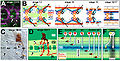 Axonal pathfinding and fasciculation behaviour in the embryonic ventral nerve cord of Drosophila

