Anti-LGBTQ rhetoric: Difference between revisions
From WikiMD's Wellness Encyclopedia
CSV import |
CSV import |
||
| Line 49: | Line 49: | ||
[[Category:Discrimination]] | [[Category:Discrimination]] | ||
[[Category:Hate Speech]] | [[Category:Hate Speech]] | ||
<gallery> | |||
File:02019 0071 (2) Rechte Demo der Unterstützung für die homophobe Predigt von Erzbischof Marek Jedraszewski.jpg|Rechte Demo der Unterstützung für die homophobe Predigt von Erzbischof Marek Jedraszewski | |||
File:Strefa wolna od LGBT - cropped, background removes.jpg|Strefa wolna od LGBT | |||
File:Madrid - Los de siempre.jpg|Madrid - Los de siempre | |||
File:Smrt pederima plato.jpg|Smrt pederima plato | |||
File:Park Kosynierow in Poznan (chlopak dziewczyna normalna rodzina).jpg|Park Kosynierow in Poznan (chlopak dziewczyna normalna rodzina) | |||
File:Westboro Baptist Church at University of Kansas graduation.jpg|Westboro Baptist Church at University of Kansas graduation | |||
File:God hates lechery.jpg|God hates lechery | |||
File:Man in Jesus Costume Counter-protesting Christian Anti-gay Protest.jpg|Man in Jesus Costume Counter-protesting Christian Anti-gay Protest | |||
File:Stop Pedofilii, Warsaw, 2.jpg|Stop Pedofilii, Warsaw | |||
File:Save Our Children From Homosexuality Brochure.jpg|Save Our Children From Homosexuality Brochure | |||
</gallery> | |||
Latest revision as of 04:54, 3 March 2025
Anti-LGBTQ Rhetoric
Anti-LGBTQ rhetoric refers to speech, writing, or other forms of communication that express hostility, discrimination, or prejudice against lesbian, gay, bisexual, transgender, and queer (LGBTQ) individuals. This type of rhetoric can manifest in various forms, including political discourse, religious teachings, media representations, and everyday language. It often perpetuates stereotypes, misinformation, and fear, contributing to the marginalization and stigmatization of LGBTQ communities.
Forms of Anti-LGBTQ Rhetoric[edit]
Anti-LGBTQ rhetoric can take many forms, including:
- Political Rhetoric: Politicians and political groups may use anti-LGBTQ rhetoric to gain support from certain voter bases. This can include opposing LGBTQ rights legislation, such as same-sex marriage or anti-discrimination laws.
- Religious Rhetoric: Some religious groups or leaders may use religious texts or beliefs to justify anti-LGBTQ views, claiming that LGBTQ identities or behaviors are sinful or immoral.
- Media Representation: Media can perpetuate anti-LGBTQ rhetoric by portraying LGBTQ individuals in a negative light, reinforcing stereotypes, or failing to include diverse and accurate representations of LGBTQ lives.
- Hate Speech: This includes derogatory language, slurs, or threats directed at LGBTQ individuals, often intended to intimidate or dehumanize.
Impact of Anti-LGBTQ Rhetoric[edit]
The impact of anti-LGBTQ rhetoric can be profound and far-reaching:
- Mental Health: Exposure to anti-LGBTQ rhetoric can lead to increased rates of anxiety, depression, and other mental health issues among LGBTQ individuals.
- Violence and Discrimination: Such rhetoric can incite violence and discrimination against LGBTQ people, leading to hate crimes and unequal treatment in various aspects of life, including employment, housing, and healthcare.
- Social Stigmatization: Anti-LGBTQ rhetoric contributes to the social stigmatization of LGBTQ individuals, making it more difficult for them to live openly and authentically.
Countering Anti-LGBTQ Rhetoric[edit]
Efforts to counter anti-LGBTQ rhetoric include:
- Education and Awareness: Promoting understanding and acceptance through education about LGBTQ issues and identities.
- Legislation: Enacting laws that protect LGBTQ individuals from discrimination and hate speech.
- Media Advocacy: Encouraging accurate and positive representations of LGBTQ people in media.
- Community Support: Building supportive communities and networks for LGBTQ individuals to foster resilience and empowerment.
Also see[edit]
| |||||
| |||||
| |||||
| |||||
| |||||
|

-
 Rechte Demo der Unterstützung für die homophobe Predigt von Erzbischof Marek Jedraszewski
 -
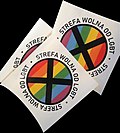 Strefa wolna od LGBT
 -
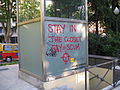 Madrid - Los de siempre
 -
 Smrt pederima plato
 -
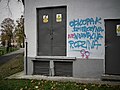 Park Kosynierow in Poznan (chlopak dziewczyna normalna rodzina)
 -
 Westboro Baptist Church at University of Kansas graduation
 -
 God hates lechery
 -
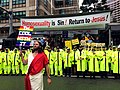 Man in Jesus Costume Counter-protesting Christian Anti-gay Protest
 -
 Stop Pedofilii, Warsaw
 -
 Save Our Children From Homosexuality Brochure
_Rechte_Demo_der_Unterst%C3%BCtzung_f%C3%BCr_die_homophobe_Predigt_von_Erzbischof_Marek_Jedraszewski.jpg)


.jpg)


