Salvia officinalis: Difference between revisions
CSV import |
CSV import |
||
| Line 30: | Line 30: | ||
{{stub}} | {{stub}} | ||
== Salvia officinalis == | |||
<gallery> | |||
File:Salvia_officinalis0.jpg|Salvia officinalis | |||
File:Koeh-126.jpg|Koehler's Medicinal Plants | |||
File:Salvia_officinalis_Berggarten.JPG|Salvia officinalis Berggarten | |||
File:Salvia_officinalis_'Icterina'.jpg|Salvia officinalis 'Icterina' | |||
File:Salvia_purpurea.JPG|Salvia purpurea | |||
File:Salvia_officinalis3.jpg|Salvia officinalis | |||
File:Tacuin_Sauge36.jpg|Tacuinum Sanitatis | |||
File:Salvia_officinalis_close_up.jpg|Salvia officinalis close up | |||
File:Salvia_officinalis_in_vaso.JPG|Salvia officinalis in vaso | |||
File:Graines_sauge.jpg|Graines sauge | |||
</gallery> | |||
Latest revision as of 21:35, 23 February 2025
Salvia officinalis (also known as sage, common sage, or garden sage) is a perennial, evergreen subshrub, with woody stems, grayish leaves, and blue to purplish flowers. It is a member of the mint family Lamiaceae and native to the Mediterranean region, though it has naturalized in many places throughout the world.
Description[edit]
Salvia officinalis has numerous common names. Some of the best-known are sage, common sage, garden sage, golden sage, kitchen sage, true sage, culinary sage, Dalmatian sage, and broadleaf sage. Cultivated forms include purple sage and red sage. The specific epithet officinalis refers to the plant's medicinal use—the officina was the traditional storeroom of a monastery where herbs and medicines were stored.
Uses[edit]
Culinary[edit]
Sage is used in the culinary world for its flavorful leaves. The leaves are used fresh or dried as a flavoring in many foods.
Medicinal[edit]
Sage has a long history of medicinal use for ailments ranging from mental disorders to gastrointestinal discomfort. It has been used in traditional medicine for its antibacterial and anti-inflammatory properties.
Cultivation[edit]
Salvia officinalis has been grown for centuries in the Old World for its food and healing properties, and was often described in old herbals for the many miraculous properties attributed to it. The specific epithet, officinalis, refers to the plant's medicinal use.
See also[edit]
References[edit]
<references />
External links[edit]
 | |
|---|---|
 |
 |
Salvia officinalis[edit]
-
 Salvia officinalis
 -
 Koehler's Medicinal Plants
 -
 Salvia officinalis Berggarten
 -
 Salvia officinalis 'Icterina'
 -
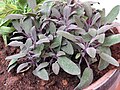 Salvia purpurea
 -
 Salvia officinalis
 -
 Tacuinum Sanitatis
 -
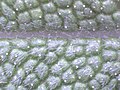 Salvia officinalis close up
 -
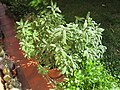 Salvia officinalis in vaso
 -
 Graines sauge


