Shamanism: Difference between revisions
CSV import |
CSV import |
||
| Line 35: | Line 35: | ||
{{stub}} | {{stub}} | ||
<gallery> | |||
File:SB_-_Altay_shaman_with_drum.jpg|Altay shaman with drum | |||
File:Witsen's_Shaman.JPG|Witsen's Shaman | |||
File:Shaman_tableau.png|Shaman tableau | |||
File:Goldes_shaman_priest_in_his_regalia.png|Goldes shaman priest in his regalia | |||
File:Shamans_Drum.jpg|Shaman's Drum | |||
File:COLLECTIE_TROPENMUSEUM_Een_shamaan_op_Zuid-Boeroe_bezweert_boze_geesten_de_kinderen_te_verlaten_waarbij_hij_een_geldstuk_en_een_sirihnoot_offert_TMnr_10001031.jpg|A shaman on South Buru exorcising evil spirits | |||
File:An_Itneg_shaman_renewing_an_offering_to_the_spirit_shield_(1922,_Philippines).jpg|An Itneg shaman renewing an offering to the spirit shield | |||
File:Khagdaev1.JPG|Khagdaev | |||
File:Shaman.jpg|Shaman | |||
File:Kyzyl_Shaman.jpg|Kyzyl Shaman | |||
</gallery> | |||
Revision as of 21:33, 23 February 2025
Shamanism is a religious practice that involves a practitioner, a shaman, who is believed to interact with a spirit world through altered states of consciousness, such as trance. The goal of this is usually to direct these spirits or spiritual energies into the physical world, for healing or some other purpose.
Origins and history
Shamanism is believed to be an ancient practice, with archaeological evidence suggesting it was practiced during the Paleolithic period. It is found in many indigenous cultures around the world, from the Sami people in Scandinavia, to the Native Americans in North America, to the Aboriginal Australians in Australia.
Beliefs and practices
Shamans believe in a world filled with spirits, both good and evil, and that these spirits can have a direct impact on the human world. They enter into a trance state during a ritual, and practice divination and healing.
Trance
The shaman enters a trance state in order to interact with the spirit world. This is often achieved through rhythmic drumming, dancing, or the use of psychoactive substances.
Divination
Shamans use divination to gain knowledge from the spirit world. This can be used to diagnose illness, find lost objects, or predict future events.
Healing
Shamans are often called upon to heal people who are ill. They do this by restoring the balance between the person and the spirit world, often by retrieving the person's lost soul.
Criticism and controversy
Shamanism has been criticized for its use of psychoactive substances, and for its lack of scientific evidence. It has also been accused of being a form of cultural appropriation when practiced by non-indigenous people.
See also
References
<references />
External links
 | |
|---|---|
 |
 |
-
 Altay shaman with drum
 -
 Witsen's Shaman
 -
 Shaman tableau
 -
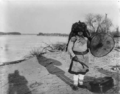 Goldes shaman priest in his regalia
 -
Shaman's Drum
-
 A shaman on South Buru exorcising evil spirits
 -
 An Itneg shaman renewing an offering to the spirit shield
 -
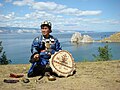 Khagdaev
 -
 Shaman
 -
 Kyzyl Shaman


.jpg)


