Divination
Divination is a traditional method of attempting to gain insight into a question or situation by way of an occultic, standardized process or ritual. It is often used in a religious context, but is also found in the context of paranormal phenomena.
Overview[edit]
Divination is a practice that seeks to foresee or foretell future events or discover hidden knowledge, usually by the interpretation of omens or by the aid of supernatural powers. It is often associated with the supernatural and is commonly used in a religious context. However, it is also used in the context of the paranormal, such as in astrology, tarot card reading, and palmistry.
History[edit]
The history of divination can be traced back to ancient times. It was practiced in ancient Egypt, Greece, China, and India, among other places. In these cultures, divination was often used to predict the future, diagnose illness, and determine the best course of action in various situations.
Methods[edit]
There are many different methods of divination, including but not limited to:
- Astrology: The study of the movements and relative positions of celestial bodies interpreted as having an influence on human affairs and the natural world.
- Tarot card reading: A type of cartomancy that uses a deck of tarot cards, typically 78 in number, for divination.
- Palmistry: The practice of reading the lines and other features of the hand to predict the future and determine personal characteristics.
- Numerology: The belief in the divine or mystical relationship between a number and one or more coinciding events.
Criticism[edit]
Divination has been criticized by skeptics and scientists who argue that there is no scientific evidence to support the efficacy of divination and that it is based on superstition and fallacious reasoning.
See also[edit]
References[edit]

This WikiMD article can only be edited by registered and verified editors. You can log in or register.
-
 Divination
 -
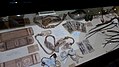 Divination display at the Pitt Rivers Museum
 -
 Chicken Divination
 -
 Joseph Enthroned from a Falnama (Book of Omens), circa 1550 AD


,_circa_1550_AD.jpg)

Medical Disclaimer: WikiMD is for informational purposes only and is not a substitute for professional medical advice. Content may be inaccurate or outdated and should not be used for diagnosis or treatment. Always consult your healthcare provider for medical decisions. Verify information with trusted sources such as CDC.gov and NIH.gov. By using this site, you agree that WikiMD is not liable for any outcomes related to its content. See full disclaimer.
Credits:Most images are courtesy of Wikimedia commons, and templates, categories Wikipedia, licensed under CC BY SA or similar.
Translate page: - East Asian
中文,
日本,
한국어,
South Asian
हिन्दी,
தமிழ்,
తెలుగు,
Urdu,
ಕನ್ನಡ,
Southeast Asian
Indonesian,
Vietnamese,
Thai,
မြန်မာဘာသာ,
বাংলা
European
español,
Deutsch,
français,
Greek,
português do Brasil,
polski,
română,
русский,
Nederlands,
norsk,
svenska,
suomi,
Italian
Middle Eastern & African
عربى,
Turkish,
Persian,
Hebrew,
Afrikaans,
isiZulu,
Kiswahili,
Other
Bulgarian,
Hungarian,
Czech,
Swedish,
മലയാളം,
मराठी,
ਪੰਜਾਬੀ,
ગુજરાતી,
Portuguese,
Ukrainian

