Mineralogy: Difference between revisions
CSV import |
CSV import Tags: mobile edit mobile web edit |
||
| Line 34: | Line 34: | ||
[[Category:Geology]] | [[Category:Geology]] | ||
{{stub}} | {{stub}} | ||
== Mineralogy == | |||
<gallery> | |||
File:Mineralogy_between_its_other_sciences_around.png|Mineralogy between its other sciences around | |||
File:Mohs_mineralogy_vol_2_plate_19.jpg|Mohs mineralogy vol 2 plate 19 | |||
File:Moon_Mineralogy_Mapper_left.jpg|Moon Mineralogy Mapper left | |||
File:Calcit_Scalenoeder_-_Egremont,_England.jpg|Calcit Scalenoeder - Egremont, England | |||
File:Aragonite_redbrown_crystals.jpg|Aragonite redbrown crystals | |||
File:Perovskite.jpg|Perovskite | |||
File:Portable_Micro-X-ray_fluorescence_machine.jpg|Portable Micro-X-ray fluorescence machine | |||
File:CSIRO_ScienceImage_1483_Olivine_Adcumulate.jpg|CSIRO ScienceImage 1483 Olivine Adcumulate | |||
File:Hanksite.JPG|Hanksite | |||
File:Americana_1920_Mineralogy_-_Valuable_Minerals.jpg|Americana 1920 Mineralogy - Valuable Minerals | |||
File:Mineralogy.jpg|Mineralogy | |||
</gallery> | |||
Latest revision as of 21:17, 23 February 2025
Mineralogy is a branch of Earth science that studies minerals, their crystal structure, chemical composition, physical properties, and the way they form and break down. It is a crucial field in the study of geology, materials science, and soil science.
History[edit]
The study of mineralogy dates back to ancient times. The Ancient Greeks and Ancient Romans, for example, both had a keen interest in minerals. However, it was not until the 19th century that mineralogy became a formalized science.
Branches of Mineralogy[edit]
Mineralogy can be divided into several sub-disciplines, including:
- Descriptive Mineralogy: This branch focuses on the description and classification of minerals.
- Chemical Mineralogy: This branch studies the chemical composition of minerals.
- Physical Mineralogy: This branch examines the physical properties of minerals.
- Optical Mineralogy: This branch uses light to study minerals.
- Environmental Mineralogy: This branch looks at the role minerals play in the environment.
Importance of Mineralogy[edit]
Mineralogy is important for a number of reasons. It helps us understand the Earth's history and the processes that have shaped it. It also plays a crucial role in the discovery and exploitation of mineral resources, and it contributes to the development of new materials and technologies.
See Also[edit]
References[edit]
<references />
 | |
|---|---|
 |
 |
Mineralogy[edit]
-
 Mineralogy between its other sciences around
 -
 Mohs mineralogy vol 2 plate 19
 -
 Moon Mineralogy Mapper left
 -
 Calcit Scalenoeder - Egremont, England
 -
 Aragonite redbrown crystals
 -
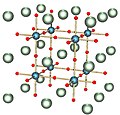 Perovskite
 -
 Portable Micro-X-ray fluorescence machine
 -
 CSIRO ScienceImage 1483 Olivine Adcumulate
 -
 Hanksite
 -
 Americana 1920 Mineralogy - Valuable Minerals
 -
 Mineralogy


