Wine cellar: Difference between revisions
CSV import |
CSV import |
||
| Line 1: | Line 1: | ||
= Wine Cellar = | |||
[[File: | [[File:Wine_cellar.jpg|thumb|right|A traditional wine cellar]] | ||
A '''wine cellar''' is a storage room for [[wine]] in bottles or barrels, or more rarely in carboys, amphorae, or plastic containers. In an active wine cellar, temperature and humidity are maintained by a climate control system. Passive wine cellars are not climate-controlled, and are usually built underground to reduce temperature swings. | |||
== Purpose == | == Purpose == | ||
The primary purpose of a wine cellar is to protect the wine from potentially harmful external influences, providing darkness, constant temperature, and humidity. Wine is a perishable product, and | |||
The primary purpose of a wine cellar is to protect the wine from potentially harmful external influences, providing darkness, constant temperature, and humidity. Wine is a perishable product, and improper storage can lead to spoilage. A well-maintained wine cellar can preserve the quality and taste of wine for many years. | |||
== Types of Wine Cellars == | == Types of Wine Cellars == | ||
[[File:Sonoma_Wine_Cellar-9462.jpg|thumb|left|A modern wine cellar in Sonoma]] | |||
=== Active Wine Cellars === | === Active Wine Cellars === | ||
Active wine cellars are equipped with climate control systems | Active wine cellars are equipped with climate control systems to maintain a consistent environment. These systems regulate temperature and humidity, ensuring optimal conditions for wine storage. Active cellars are often used in regions where the natural climate is not suitable for wine preservation. | ||
=== Passive Wine Cellars === | === Passive Wine Cellars === | ||
Passive wine cellars rely on natural conditions to maintain a stable environment. They are typically located underground | Passive wine cellars rely on natural conditions to maintain a stable environment. They are typically located underground, where the earth provides insulation against temperature fluctuations. Passive cellars are more common in regions with naturally cool and stable climates. | ||
== Design | == Design and Construction == | ||
[[File:Oxford_-_Jesus_College_-_0531.jpg|thumb|right|A historic wine cellar at Jesus College, Oxford]] | |||
The design of a wine cellar can vary greatly depending on the intended use and location. Key considerations include insulation, ventilation, and the choice of materials. Stone, brick, and concrete are commonly used for their thermal mass and ability to maintain a stable temperature. | |||
== Wine Racks == | == Wine Racks and Storage == | ||
Wine racks are an essential component of a wine cellar, providing | |||
Wine racks are an essential component of a wine cellar, providing organized storage for bottles. Racks can be made from wood, metal, or plastic, and are designed to hold bottles horizontally, keeping the cork moist and preventing air from entering the bottle. | |||
== Famous Wine Cellars == | |||
[[File:Muga_Wine_cellar.jpg|thumb|left|Muga wine cellar in Spain]] | |||
Some wine cellars are renowned for their size, history, or the quality of wine they store. Notable examples include: | |||
* The cellars of [[Mileştii Mici]] in Moldova, which hold the Guinness World Record for the largest wine collection. | |||
* The historic cellars of [[Schramsberg Vineyards]] in California, known for their sparkling wines. | |||
* The port wine cellars of [[Graham's Port]] in Porto, Portugal. | |||
== Wine Cellar Management == | |||
Proper management of a wine cellar involves regular monitoring of temperature and humidity, as well as inventory management. Wine cellar management software can assist in tracking bottle locations, tasting notes, and aging potential. | |||
== Related Pages == | == Related Pages == | ||
* [[Wine tasting]] | * [[Wine tasting]] | ||
* [[Wine storage]] | * [[Wine storage]] | ||
* [[Sommelier]] | |||
* [[Winemaking]] | |||
[[File:Mileştii_Mici_(3944427747).jpg|thumb|right|The extensive wine cellars of Mileştii Mici]] | |||
== Gallery == | |||
<gallery> | |||
File:Schramsberg_Vineyards,_July_2019-7579+7580.jpg|Schramsberg Vineyards wine cellar | |||
File:Porto.Grahams02.jpg|Graham's Port wine cellar | |||
File:Sherry_cellar,_Solera_system,_2003.jpg|Sherry cellar with solera system | |||
</gallery> | |||
[[Category:Wine]] | [[Category:Wine]] | ||
[[Category:Storage]] | [[Category:Storage rooms]] | ||
Latest revision as of 14:12, 21 February 2025
Wine Cellar[edit]

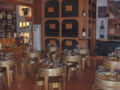
A wine cellar is a storage room for wine in bottles or barrels, or more rarely in carboys, amphorae, or plastic containers. In an active wine cellar, temperature and humidity are maintained by a climate control system. Passive wine cellars are not climate-controlled, and are usually built underground to reduce temperature swings.
Purpose[edit]
The primary purpose of a wine cellar is to protect the wine from potentially harmful external influences, providing darkness, constant temperature, and humidity. Wine is a perishable product, and improper storage can lead to spoilage. A well-maintained wine cellar can preserve the quality and taste of wine for many years.
Types of Wine Cellars[edit]

Active Wine Cellars[edit]
Active wine cellars are equipped with climate control systems to maintain a consistent environment. These systems regulate temperature and humidity, ensuring optimal conditions for wine storage. Active cellars are often used in regions where the natural climate is not suitable for wine preservation.
Passive Wine Cellars[edit]
Passive wine cellars rely on natural conditions to maintain a stable environment. They are typically located underground, where the earth provides insulation against temperature fluctuations. Passive cellars are more common in regions with naturally cool and stable climates.
Design and Construction[edit]

The design of a wine cellar can vary greatly depending on the intended use and location. Key considerations include insulation, ventilation, and the choice of materials. Stone, brick, and concrete are commonly used for their thermal mass and ability to maintain a stable temperature.
Wine Racks and Storage[edit]
Wine racks are an essential component of a wine cellar, providing organized storage for bottles. Racks can be made from wood, metal, or plastic, and are designed to hold bottles horizontally, keeping the cork moist and preventing air from entering the bottle.
Famous Wine Cellars[edit]

Some wine cellars are renowned for their size, history, or the quality of wine they store. Notable examples include:
- The cellars of Mileştii Mici in Moldova, which hold the Guinness World Record for the largest wine collection.
- The historic cellars of Schramsberg Vineyards in California, known for their sparkling wines.
- The port wine cellars of Graham's Port in Porto, Portugal.
Wine Cellar Management[edit]
Proper management of a wine cellar involves regular monitoring of temperature and humidity, as well as inventory management. Wine cellar management software can assist in tracking bottle locations, tasting notes, and aging potential.
Related Pages[edit]
.jpg)
Gallery[edit]
-
 Schramsberg Vineyards wine cellar
 -
 Graham's Port wine cellar
 -
 Sherry cellar with solera system


