Vine: Difference between revisions
CSV import Tags: mobile edit mobile web edit |
CSV import |
||
| Line 44: | Line 44: | ||
[[Category:Plant morphology]] | [[Category:Plant morphology]] | ||
[[Category:Vines]] | [[Category:Vines]] | ||
<gallery> | |||
File:A_Momordica_charantia-_bitter_guard_plant.jpg|A Momordica charantia - bitter guard plant | |||
File:Vine.jpg|Vine | |||
File:Vine-1.jpg|Vine-1 | |||
File:Schornstein_Kletterpflanze_Meidling.jpg|Schornstein Kletterpflanze Meidling | |||
File:Helix_diagram-de.png|Helix diagram | |||
File:Fockea_edulis_07_ies.jpg|Fockea edulis | |||
File:Brunnichia_ovata.jpg|Brunnichia ovata | |||
File:Bigvine.jpg|Bigvine | |||
File:Senecio_tamoides_13.jpg|Senecio tamoides | |||
File:Ficus_pumila.jpg|Ficus pumila | |||
File:Virginiacreepertendril.jpg|Virginia creeper tendril | |||
File:Senecioangulatus.jpg|Senecio angulatus | |||
File:Trachelospermum_jasminoides_HRM1.jpg|Trachelospermum jasminoides | |||
</gallery> | |||
Revision as of 21:46, 20 February 2025
A comprehensive overview of the vine plant and its significance in various contexts
Overview
A vine is a type of plant that grows and spreads by climbing or trailing along surfaces. Vines can be found in a variety of environments and are known for their ability to cover large areas, often using other structures for support. They are an important component of many ecosystems and have significant cultural and economic value.
Characteristics
Vines are characterized by their long, flexible stems that allow them to climb or spread across surfaces. They often have specialized structures such as tendrils, twining stems, or adhesive pads that help them attach to supports. Vines can be either woody or herbaceous, and they may be annual or perennial.
Growth Habits
Vines exhibit various growth habits, including:
- Climbing: Using tendrils or twining stems to ascend vertical surfaces.
- Trailing: Spreading horizontally across the ground or other surfaces.
- Creeping: Growing close to the ground and rooting at intervals.
Ecological Role
Vines play a crucial role in their ecosystems by providing habitat and food for various animal species. They can also contribute to the structural complexity of forests and other habitats, offering shelter and nesting sites for birds and insects.
Economic Importance
Vines have significant economic value in agriculture and horticulture. Some of the most well-known vines include:
- Grapevines: Cultivated for wine production and table grapes.
- Hops: Used in the brewing of beer.
- Vanilla: The vanilla orchid is a vine that produces vanilla beans.
Cultural Significance
Vines have been used symbolically in various cultures. For example, grapevines are often associated with Dionysus, the Greek god of wine, and are a symbol of abundance and fertility.
Examples of Vines
Some common examples of vines include:
- Ivy: Known for its ability to cover walls and buildings.
- Wisteria: Valued for its beautiful, fragrant flowers.
- Morning glory: Recognized for its vibrant, trumpet-shaped flowers.
Cultivation and Care
Growing vines requires understanding their specific needs, such as:
- Support structures: Providing trellises or other supports for climbing varieties.
- Pruning: Regular pruning to control growth and encourage flowering.
- Soil and water: Ensuring appropriate soil conditions and watering practices.
Related Pages
-
A Momordica charantia - bitter guard plant
-
 Vine
Vine -
 Vine-1
 -
 Schornstein Kletterpflanze Meidling
 -
 Helix diagram
 -
 Fockea edulis
 -
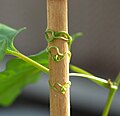 Brunnichia ovata
 -
 Bigvine
 -
 Senecio tamoides
 -
 Ficus pumila
 -
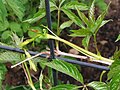 Virginia creeper tendril
 -
 Senecio angulatus
 -
 Trachelospermum jasminoides


