Portuguese sauce: Difference between revisions
CSV import Tags: mobile edit mobile web edit |
CSV import |
||
| Line 22: | Line 22: | ||
{{food-stub}} | {{food-stub}} | ||
<gallery> | |||
File:HK_lunch_大家樂_Coral_de_Cafe_葡汁_Portuguese_sauce_June-2012.JPG|Portuguese sauce | |||
</gallery> | |||
Revision as of 21:41, 20 February 2025
Portuguese sauce is a culinary preparation, not tied to a single recipe but rather a variety of sauces that have evolved within Portuguese cuisine. It reflects the rich and diverse culinary tradition of Portugal, influenced by its history, geography, and cultural exchanges. Portuguese sauces are known for their vibrant flavors, often incorporating a mix of spices, herbs, and ingredients that are quintessential to the Portuguese pantry.
Ingredients and Variations
The ingredients in a Portuguese sauce can vary widely, but they often include a base of tomatoes, onions, and garlic, with the addition of various herbs such as coriander or parsley, and spices like paprika or pimenta. Depending on the region and the specific recipe, other ingredients such as olive oil, vinegar, wine, or bay leaves may also be included. In some variations, especially those used in seafood dishes, bell peppers and lemon juice are common.
Culinary Uses
Portuguese sauce is versatile and can be used in a multitude of dishes. It serves as a base for stews and soups, a marinade for meats and seafood, or a condiment to enhance the flavor of a dish. One of the most famous dishes that utilize Portuguese sauce is Frango Piri-Piri, which is grilled chicken marinated in a spicy version of the sauce, showcasing the influence of African ingredients like piri-piri chilies on Portuguese cuisine.
Regional Variations
The composition of Portuguese sauce can vary significantly from one region to another within Portugal. For example, in the Algarve, the emphasis might be on seafood flavors, incorporating local fish and shellfish, while in the interior regions, the sauce might be richer in meats and poultry. The Azores and Madeira, with their unique geographical and cultural contexts, have also developed distinctive versions of Portuguese sauce, often incorporating local ingredients and tastes.
Cultural Significance
Portuguese sauce is more than just a culinary component; it is a reflection of Portugal's history and cultural diversity. The variety of ingredients and preparation methods speaks to the country's navigational and colonial past, where spices and techniques from Africa, Asia, and the Americas were integrated into the local cuisine. This sauce, in its many forms, is a testament to the adaptability and creativity of Portuguese cooking.
See Also

-
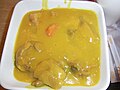 Portuguese sauce

