Bawang goreng: Difference between revisions
CSV import |
CSV import |
||
| Line 28: | Line 28: | ||
[[Category:Food ingredients]] | [[Category:Food ingredients]] | ||
{{food-stub}} | {{food-stub}} | ||
<gallery> | |||
File:Fried_shallots_bawang_goreng.JPG|Fried shallots bawang goreng | |||
File:Shallot_(Sambar_Onion)_(1).JPG|Shallot (Sambar Onion) | |||
File:Woman_chopping_shallots.jpg|Woman chopping shallots | |||
File:Sliced_shallots_for_bawang_goreng.JPG|Sliced shallots for bawang goreng | |||
File:Bawang_goreng.JPG|Bawang goreng | |||
File:Bawang_goreng_onionku.jpg|Bawang goreng onionku | |||
File:Nasi_Uduk_Box.jpg|Nasi Uduk Box | |||
File:Empal_Gepuk.jpg|Empal Gepuk | |||
File:Semur_Daging_Kentang.JPG|Semur Daging Kentang | |||
File:Sate_ayam.jpg|Sate ayam | |||
File:Bakso.jpg|Bakso | |||
</gallery> | |||
Latest revision as of 21:32, 20 February 2025
Bawang goreng is a popular ingredient in Indonesian cuisine and Malaysian cuisine. It is made from shallots that have been deep-fried until they become crispy and golden brown. Bawang goreng is often used as a garnish or added to dishes to enhance their flavor.
History[edit]
The use of bawang goreng in Indonesian and Malaysian cuisine dates back centuries. It is believed to have originated from the culinary traditions of the Malay people, who have a long history of using shallots in their cooking.
Preparation[edit]
To prepare bawang goreng, shallots are first peeled and thinly sliced. They are then deep-fried in oil until they turn a golden brown color. The fried shallots are then drained on paper towels to remove excess oil before they are used in cooking or as a garnish.
Uses[edit]
Bawang goreng is used in a variety of dishes in Indonesian and Malaysian cuisine. It is often sprinkled on top of dishes like nasi goreng (fried rice), soto (soup), and gado-gado (vegetable salad with peanut sauce). It is also used in the preparation of rendang, a spicy meat dish, and biryani, a rice dish.
Health Benefits[edit]
While bawang goreng is high in fat due to the deep-frying process, shallots themselves are known to have several health benefits. They are a good source of vitamin C, vitamin B6, and manganese, and they also contain antioxidants that can help protect the body against damage from free radicals.
See Also[edit]

-
 Fried shallots bawang goreng
 -
 Shallot (Sambar Onion)
 -
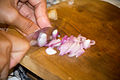 Woman chopping shallots
 -
 Sliced shallots for bawang goreng
 -
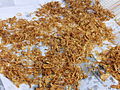 Bawang goreng
 -
 Bawang goreng onionku
 -
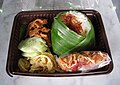 Nasi Uduk Box
 -
 Empal Gepuk
 -
 Semur Daging Kentang
 -
 Sate ayam
 -
 Bakso
Bakso

_(1).JPG)


