Bì cuốn: Difference between revisions
CSV import |
CSV import |
||
| Line 23: | Line 23: | ||
[[Category:Pork dishes]] | [[Category:Pork dishes]] | ||
{{Vietnam-food-stub}} | {{Vietnam-food-stub}} | ||
<gallery> | |||
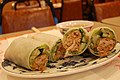
File:Bi_cuon.jpg|Bì cuốn | |||
</gallery> | |||
Latest revision as of 21:15, 20 February 2025
Bì cuốn is a traditional Vietnamese dish, often served as an appetizer or light meal. The dish is a type of spring roll, made with a variety of ingredients wrapped in rice paper.
Ingredients[edit]
The primary ingredient in bì cuốn is bì, a preparation of pork that has been boiled, shredded, and mixed with roasted rice powder. This gives the pork a unique, slightly crunchy texture. Other ingredients typically include fresh herbs, lettuce, and sometimes prawns or chicken. All of these ingredients are wrapped in thin, translucent sheets of rice paper.
Preparation[edit]
To prepare bì cuốn, the rice paper is first softened in warm water. The ingredients are then arranged on the rice paper, and the paper is rolled up to enclose the ingredients. The rolls are typically served with a dipping sauce, such as nước chấm, a sauce made from fish sauce, lime juice, sugar, garlic, and chili.
Variations[edit]
There are many variations of bì cuốn, depending on the region of Vietnam and personal preference. Some versions may include additional ingredients such as bean sprouts, cucumber, or pickled vegetables. In some regions, bì cuốn is served with a peanut sauce instead of nước chấm.
Cultural Significance[edit]
Bì cuốn is a popular dish in Vietnam, often served at family gatherings and celebrations. It is also commonly found at street food stalls and in restaurants. The dish is known for its fresh, light flavors and its combination of different textures.
See Also[edit]
This Vietnam-food related article is a stub. You can help WikiMD by expanding it.
-
 Bì cuốn

