Inotersen: Difference between revisions
CSV import |
CSV import |
||
| Line 34: | Line 34: | ||
[[Category:Antisense oligonucleotides]] | [[Category:Antisense oligonucleotides]] | ||
[[Category:Drugs used in amyloidosis]] | [[Category:Drugs used in amyloidosis]] | ||
<gallery> | |||
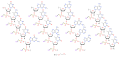
File:Inotersen.svg|Inotersen | |||
</gallery> | |||
Latest revision as of 01:50, 20 February 2025
An article about the medication Inotersen
| Inotersen | |
|---|---|

| |
| INN | |
| Drug class | |
| Routes of administration | |
| Pregnancy category | |
| Bioavailability | |
| Metabolism | |
| Elimination half-life | |
| Excretion | |
| Legal status | |
| CAS Number | |
| PubChem | |
| DrugBank | |
| ChemSpider | |
| KEGG | |
Inotersen is a medication used in the treatment of hereditary transthyretin-mediated amyloidosis (hATTR) in adults. It is an antisense oligonucleotide that targets the transthyretin (TTR) protein, reducing its production and thereby alleviating the symptoms associated with the disease.
Mechanism of Action[edit]
Inotersen works by binding to the messenger RNA (mRNA) of the transthyretin protein, which is primarily produced in the liver. By binding to the mRNA, inotersen prevents the translation of the TTR protein, leading to a decrease in its levels in the bloodstream. This reduction in TTR protein helps to prevent the formation of amyloid deposits in tissues, which are responsible for the symptoms of hATTR.
Clinical Use[edit]
Inotersen is indicated for the treatment of adults with hereditary transthyretin-mediated amyloidosis. This condition is characterized by the accumulation of amyloid fibrils in various organs and tissues, leading to a range of symptoms including peripheral neuropathy, autonomic dysfunction, and cardiomyopathy.
Administration[edit]
Inotersen is administered via subcutaneous injection. The typical dosing regimen involves weekly injections, which patients can self-administer after receiving appropriate training.
Side Effects[edit]
Common side effects of inotersen include injection site reactions, nausea, headache, and fatigue. More serious side effects can include thrombocytopenia (low platelet count) and glomerulonephritis (inflammation of the kidneys). Regular monitoring of platelet counts and renal function is recommended during treatment.
Monitoring[edit]
Patients receiving inotersen require regular monitoring to ensure safety and efficacy. This includes:
- Regular platelet count checks to monitor for thrombocytopenia.
- Renal function tests to detect any signs of kidney damage.
- Liver function tests, as the liver is the primary site of TTR production.
Related pages[edit]
-
 Inotersen
