Salicylmethylecgonine: Difference between revisions
CSV import Tags: mobile edit mobile web edit |
CSV import |
||
| Line 32: | Line 32: | ||
{{pharma-stub}} | {{pharma-stub}} | ||
{{medicine-stub}} | {{medicine-stub}} | ||
== Salicylmethylecgonine == | |||
<gallery> | |||
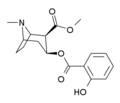
File:Salicylecgonine.png|Salicylmethylecgonine | |||
</gallery> | |||
Latest revision as of 01:41, 20 February 2025
Salicylmethylecgonine is a tropane alkaloid that is used as a local anesthetic. It is derived from the coca plant, and is most commonly known for its use in the production of cocaine.
History[edit]
Salicylmethylecgonine was first isolated from the coca plant in the mid-19th century. It was initially used as a local anesthetic in eye surgery due to its ability to numb the area and constrict blood vessels, which reduces bleeding.
Structure and Properties[edit]
Salicylmethylecgonine is a tropane alkaloid, which means it contains a bicyclic structure of a seven-membered ring fused to a three-membered ring. It is a white, crystalline powder that is soluble in water and alcohol.
Uses[edit]
The primary use of Salicylmethylecgonine is as a local anesthetic. It is also used in the production of cocaine, a powerful stimulant drug.
Health Effects[edit]
When used as a local anesthetic, Salicylmethylecgonine can cause numbness in the area where it is applied. If ingested or inhaled, it can cause a variety of health effects, including increased heart rate, elevated blood pressure, and potential damage to the heart and nervous system.
Legal Status[edit]
In many countries, including the United States, Salicylmethylecgonine is classified as a controlled substance due to its potential for abuse and addiction.
See Also[edit]


Salicylmethylecgonine[edit]
-
 Salicylmethylecgonine

