Sansai: Difference between revisions
CSV import |
CSV import |
||
| Line 50: | Line 50: | ||
This article provides a brief overview of Sansai, its history, common types, preparation and cooking methods, health benefits, and related topics. It also includes internal links to related topics and categories. | This article provides a brief overview of Sansai, its history, common types, preparation and cooking methods, health benefits, and related topics. It also includes internal links to related topics and categories. | ||
<gallery> | |||
File:Matteuccia struthiopteris 2005 spring 002.jpg|Matteuccia struthiopteris | |||
File:Pteridium aquilinum 2005 spring 001.jpg|Pteridium aquilinum | |||
</gallery> | |||
Latest revision as of 01:34, 20 February 2025
Overview of Sansai:
```
Sansai
| Overview | |
|---|---|
| Origin | Japan |
| Type | Edible wild plants |
| Season | Spring |
Sansai (Japanese: 山菜) refers to edible wild plants that are commonly used in Japanese cuisine. The term "sansai" translates to "mountain vegetables" in English.
History[edit]
The tradition of foraging and consuming sansai in Japan dates back to the Jomon period. These plants were a vital source of nutrition during the spring season when other food sources were scarce.
Common Sansai[edit]
Some of the most common sansai include:
- Warabi (Bracken fern)
- Takenoko (Bamboo shoots)
- Kogomi (Ostrich fern)
- Fuki (Butterbur)
- Udo (Spikenard)
Preparation and Cooking[edit]
Sansai are typically blanched before cooking to remove any bitterness. They are often used in dishes such as tempura, soba, and miso soup.
Health Benefits[edit]
Sansai are rich in vitamins and minerals, and are known for their antioxidant properties. They are also low in calories, making them a healthy addition to any diet.
See Also[edit]
References[edit]
<references />
External Links[edit]
- [Example Website]
```
This article provides a brief overview of Sansai, its history, common types, preparation and cooking methods, health benefits, and related topics. It also includes internal links to related topics and categories.
-
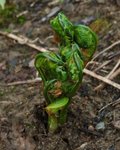 Matteuccia struthiopteris
 -
 Pteridium aquilinum


