Sanbeiji: Difference between revisions
CSV import |
CSV import |
||
| Line 18: | Line 18: | ||
{{Chinese-food-stub}} | {{Chinese-food-stub}} | ||
{{food-stub}} | {{food-stub}} | ||
<gallery> | |||
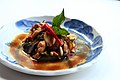
File:Sanbeiji.jpg|Sanbeiji | |||
</gallery> | |||
Latest revision as of 01:09, 20 February 2025
Sanbeiji is a popular Chinese dish, particularly in the southern and Taiwanese regions. The name "Sanbeiji" translates to "three cups chicken," referring to the three key ingredients used in its preparation: soy sauce, rice wine, and sesame oil.
History[edit]
The origins of Sanbeiji are believed to date back to the Three Kingdoms period in ancient China. It is said to have been a favorite dish of the military strategist Zhuge Liang, who served the Kingdom of Shu Han. Over time, the dish spread throughout China and eventually to Taiwan, where it became a staple of Taiwanese cuisine.
Preparation[edit]
Sanbeiji is traditionally prepared using a whole chicken, which is cut into pieces and marinated in soy sauce, rice wine, and sesame oil. The chicken is then cooked in a clay pot along with additional ingredients such as garlic, ginger, and basil. The dish is known for its rich, savory flavor and the balance of its three key ingredients.
Cultural Significance[edit]
Sanbeiji is often served at family gatherings and special occasions in both China and Taiwan. It is considered a comfort food and is a common dish in home cooking. In recent years, it has also gained popularity in Western countries due to the global spread of Chinese and Taiwanese cuisine.
Variations[edit]
While the traditional Sanbeiji recipe calls for chicken, variations of the dish can be made using other types of meat, such as pork or beef. Some versions also include additional ingredients like chili peppers for added spice or sugar for a hint of sweetness.

-
 Sanbeiji

